
Interview with Ilya Belyakov, CTO of INTEGRA CITY
The Digital Transformation Concept for 2024–2028 is intended to reshape public administration and make digital technologies an integral part of citizens’ daily lives. Artificial intelligence plays a key role in achieving these objectives and is rapidly becoming one of the primary drivers of digital transformation worldwide.
In this interview, Ilya Belyakov, Chief Technology Officer of INTEGRA CITY, shares his views on AI adoption, smart city development, digital government services, and the creation of a national innovation ecosystem.

Photo: Ilya Belyakov, Chief Technical Officer of INTEGRA CITY.
Q: Today, artificial intelligence is rapidly transforming economies and public administration around the world. For Kyrgyzstan, is AI a choice or already a necessity?
A: It is undoubtedly a necessity. Artificial intelligence is becoming one of the key drivers of economic growth and national competitiveness. Central Asia is moving rapidly toward digital transformation, and Kyrgyzstan has shown a strong interest in AI technologies. AI is no longer just a technological tool—it is increasingly becoming part of public administration and an element of digital sovereignty.
The country has already established a National Council on Artificial Intelligence and is considering the creation of an AI supercluster. Alongside adopting existing technologies, the next major challenges will be developing local expertise, training specialists, and building a national AI ecosystem.
Q: Which sectors are likely to benefit most from AI in the coming years?
A: Public administration is currently showing the greatest interest in AI. Kyrgyzstan has already built a strong foundation through the Tunduk interagency platform and G-Cloud government cloud solutions. AI can help move governance from a reactive model to a proactive one based on data analysis and forecasting.
Another important area is the Safe Country initiative, where video analytics and computer vision technologies support traffic management, public safety, and rapid incident response. AI also has significant potential in customs, taxation, healthcare, education, and virtually every sector of the economy.

Photo: Bishkek city.
Q: Many countries are moving toward fully integrated digital ecosystems. How relevant is this approach for Kyrgyzstan?
A: It is not only relevant—it is essential. Separate digital solutions automate individual processes, while an integrated digital ecosystem connects services and data into a unified environment. Without integration, there can be no truly effective AI.
By connecting government services, urban infrastructure, transportation systems, and security platforms, it becomes possible not only to respond to problems but also to predict them in advance. This is the foundation of proactive governance and one of the key goals of modern digital states.
Q: How can governments balance innovation and security as AI adoption accelerates?
A: Citizens need to understand what data is collected, how it is used, and who is responsible for protecting it. Therefore, AI implementation must go hand in hand with strong cybersecurity standards, personal data protection, transparent digital processes, and resilient infrastructure.
Kyrgyzstan has made important progress through improvements to digital legislation and the adoption of the Digital Code. Discussions are also underway regarding the establishment of an AI Ethics and Certification Center to promote responsible and transparent AI use.

Bishkek city. Author of the photo: Nikolay Gladkov.
Q: What role can AI play in building Digital Kyrgyzstan over the next five to ten years?
A: Artificial intelligence can significantly improve public services, support Smart City and Safe City initiatives, accelerate data-driven decision-making, and contribute to sustainable economic development.
Kyrgyzstan is striving to develop its own AI expertise and capabilities. AI provides powerful tools not only for building a Digital Kyrgyzstan but for creating a truly smart, secure, and people-centered nation.

The image was created using AI and is for illustrative purposes only.
Today, countries compete not only for investment, talent, and technology. Computing power is increasingly becoming a strategic resource that underpins artificial intelligence, digital services, and modern governance models.
Every AI-powered service—from digital assistants to computer vision systems—requires enormous computing resources. As a result, a new global infrastructure race is underway. Governments are investing billions of dollars in data centers, while leading technology companies are searching for locations capable of providing the energy, connectivity, and computational capacity required for the future AI economy.
Kazakhstan aims to secure its own place in this race. According to OpenAI, the country ranks among nations with a high level of AI adoption and is among the world’s top users of ChatGPT. Kazakhstan’s digital maturity was further confirmed by the Oxford Insights Government AI Readiness Index 2025, where the country ranked 60th out of 195 nations—the highest result in Central Asia.
Additional momentum is being provided by the national Digital Qazaqstan Strategy through 2029, which prioritizes digital infrastructure, artificial intelligence, and the data economy. Against this backdrop, the Data Center Valley project in Ekibastuz, investments in national AI infrastructure, and the broader vision of building a next-generation state are creating a new growth engine for Kazakhstan’s economy and technology sector.
Why Data Centers Are Becoming a New Industry
The Data Center Valley project, based on the Ekibastuz energy hub, is expected to become one of the largest infrastructure initiatives in the region. Total investments are projected at approximately USD 30 billion. The first data center is expected to be commissioned in 2027 alongside the required engineering infrastructure.

The image was created using AI and is for illustrative purposes only.
The significance of the project extends far beyond additional server capacity. Today, modern computing infrastructure is becoming as important to investment attractiveness as industrial zones, transport corridors, or access to energy resources once were. AI companies increasingly choose locations where they can rapidly scale digital products and access reliable computing resources.
As a result, large-scale data centers are becoming catalysts for entire technology ecosystems, bringing together startups, AI developers, cloud service providers, research institutions, and international technology companies.
For Kazakhstan, this represents an opportunity not only to attract investment and create jobs but also to strengthen its position as one of Eurasia’s emerging digital hubs. The expansion of computing infrastructure also provides the foundation for wider AI adoption, more advanced digital services, and increased economic competitiveness.
From Servers to Smart City Services
International experience shows that data center development rarely ends with infrastructure construction alone. It is typically followed by the emergence of companies delivering solutions in artificial intelligence, digital government, urban analytics, and public safety.

Photo: INTEGRA CITY .
One such company is INTEGRA CITY, an international technology group developing platforms for smart cities, situation centers, video analytics, and digital government services.
Although data centers remain largely invisible to citizens, they serve as the foundation for technologies used every day. Smart city management systems, video analytics, digital government platforms, transportation services, and public safety solutions all depend on the ability to process vast amounts of data in real time.
According to INTEGRA CITY representatives, access to computing resources is becoming one of the key factors determining the speed of AI implementation.
“Artificial intelligence is no longer a standalone technology. It is becoming an integral part of city management and public services. Video analytics, digital government services, situation centers, and urban infrastructure monitoring systems all rely on data and require significant computing resources.
In this context, the Data Center Valley project is not merely an infrastructure initiative but an important element of the future digital economy. Projects of this scale create the conditions necessary for integrating AI into public administration, developing smart cities, and launching new digital services for citizens and businesses.”

Photo: INTEGRA CITY .
Security as the Foundation of the Digital Economy
As governments increasingly deploy AI and digital services, requirements for data protection, infrastructure resilience, and digital sovereignty continue to grow. The development of computing capacity must be accompanied by equivalent investments in cybersecurity.
As data centers expand and the volume of processed information increases, protecting digital infrastructure becomes just as important as developing the technologies themselves. Reliability, resilience, and security directly affect the effectiveness of public services, user trust, and a country’s ability to adopt new technological solutions.
Olzhas Satiev, President of TSARKA Group, one of Central Asia’s leading cybersecurity companies, believes security has become an inseparable component of digital economic development.
“The development of data centers is not only a matter of computing power but also of national cyber resilience. The more critical data and digital services are hosted domestically, the greater the requirements for protection against cyberattacks, data breaches, and external interference.
Technological sovereignty enables governments and businesses to maintain control over data, infrastructure, and digital processes while reducing dependence on foreign platforms and geopolitical risks. Cybersecurity should therefore be embedded into data center architecture from the very beginning rather than treated as an additional feature.”
Kazakhstan on the New Global Technology Map
The development of national AI infrastructure, the launch of Data Center Valley, the growth of Alatau, and cooperation with global technology companies demonstrate that Kazakhstan is investing not only in digitalization but also in building its own technological foundation.
For businesses, this means new opportunities for growth and investment. For startups, it provides access to world-class computing resources. For the government, it creates the foundation for data-driven and AI-powered governance. For technology companies, it offers an opportunity to develop and scale next-generation solutions in digital government, smart cities, and public safety.
This is why data centers are no longer simply elements of digital infrastructure—they are strategic assets that will determine a country’s position in the global AI economy.
The development of artificial intelligence and computer vision is making facial recognition technologies an integral part of the modern urban environment.

The image was created using AI and is for illustrative purposes only.
We are used to video surveillance on city streets: it has become part of the background of urban life. But today, it is no longer simply an “eye” recording what is happening. Modern video monitoring systems can analyze, compare and draw conclusions in real time. This is why facial recognition technologies raise so many questions: how do they work, and what exactly does the system “see”?
How It Actually Works
In simplified terms, the principle is quite clear. Video devices capture an image, after which the algorithm detects a face in the frame. The system then identifies key points: the distance between the eyes, the shape of the nose, the line of the cheekbones and the contour of the lips. Based on these parameters, a mathematical model is created — a unique digital “fingerprint” of the face.
Importantly, the system does not work with a photograph, but with a set of numbers. This digital vector is compared with databases or used for event analysis. The entire process takes fractions of a second and can take place simultaneously across thousands of video streams.

The image was created using AI and is for illustrative purposes only.
Video Surveillance No Longer Simply “Watches”
Facial recognition, however, is only part of what these systems can do. Modern video analytics can “understand” what is happening in the frame: detect crowds, track vehicle movement and identify abnormal situations. Video surveillance systems are no longer passive tools; they are becoming part of the city management system.
This is where their practical value emerges. In the field of public safety, such technologies make it possible to find wanted persons more quickly and detect incidents promptly. On roads, they can record violations without the involvement of an inspector, reducing the human factor. In urban management, they help analyze flows and support data-driven decision-making.
How It Already Works Around the World
Globally, this has already become a standard practice. In Singapore, computer vision systems are integrated into public safety and transport infrastructure. In London, the police use Live Facial Recognition to search for people directly within street flows. In Dubai, video analytics is integrated into a unified Smart City platform that coordinates the work of urban services. In Shanghai, facial recognition technologies are used in the metro, at railway stations and in access control systems.
Kazakhstan is moving in the same direction. Major cities have already built the basic infrastructure: operational control centers, violation detection systems and thousands of video devices connected into a single network.

The image was created using AI and is for illustrative purposes only.
Why This Is Being Discussed Now
The topic has become especially relevant in recent weeks. The reason was the amendments to Article 31 of the Code of Administrative Offenses, which came into force on March 12 as part of the so-called “Digital Code.” The new provisions expand the possibilities for automatically detecting existing violations: if the use of a phone while driving or a seat belt violation was previously recorded by police officers on the road, intelligent systems can now perform this function.
According to Ilya Belyakov, Director of the Technical Department of the INTEGRA CITY group of companies, modern technologies have already gone beyond conventional video surveillance:
“Today, facial recognition systems are part of a unified digital city platform. Artificial intelligence analyzes video streams, identifies patterns and helps build response scenarios. Even when a person’s appearance changes, the system relies on stable biometric features, while approaches such as data augmentation and the combination of different parameters — from the face to gait — make it possible to maintain high accuracy in real-world conditions.”

Photo: Ilya Belyakov, Director of the Technical Department of the INTEGRA CITY group of companies.
Such solutions are already widely used in public spaces — from streets and transport hubs to airports, railway stations and shopping centers — where it is important to ensure a high level of security and a rapid response to incidents.
INTEGRA CITY, an international technology holding company and a potential technology partner for governments in the digitalization of urban infrastructure and public administration, develops and implements such technologies. Within its platforms, including Nexus (“Safe City”), the company uses artificial intelligence and computer vision to analyze video streams, automate security processes and support real-time decision-making.
As Saltanat Azirbek, an official representative of the Almaty Police Department, notes, in 2025 alone more than 4,500 crimes were solved using video systems, including facial recognition technologies. The functionality is expected to be expanded further.
“Today in Almaty, video surveillance no longer simply records what is happening — it helps understand and respond. The city has around 180,000 cameras, almost 67,000 of which are connected to the Operational Control Center. At the same time, around 5,000 cameras are equipped with facial recognition functionality, and this tool is already being actively used in police work. With its help, missing persons and wanted individuals can be identified in real time. Overall, video analytics is becoming an important part of everyday police operations: it helps respond to situations faster and work with data more accurately. It is important that every resident and visitor of Almaty feels calm and safe in the city.”
Balancing Technology and Citizens’ Rights
In many countries, the introduction of facial recognition technologies is accompanied by the development of clear rules for their use. The focus is on personal data protection, transparency and control over access to information.
Modern systems are applied within the framework of legislation and are limited to specific tasks, primarily in the field of security. This makes it possible not only to increase the efficiency of city services, but also to maintain a balance between technological development and citizens’ rights.
The Digital Future of Cities
The development of artificial intelligence and computer vision continues to expand the capabilities of urban systems. In the coming years, such technologies will be able to analyze events more accurately, forecast risks and integrate with digital city management platforms.
In Kazakhstan, these processes are becoming part of a broader transformation: the transition to a digital state and the development of the Smart City and Smart Region concepts. Intelligent video surveillance systems form the foundation for creating a unified digital management framework for the city, where data is used to improve safety, efficiency and quality of life.
Thus, facial recognition technology is not merely a tool of control, but an important element of digital infrastructure that helps cities become more manageable, safer and more human-centered.
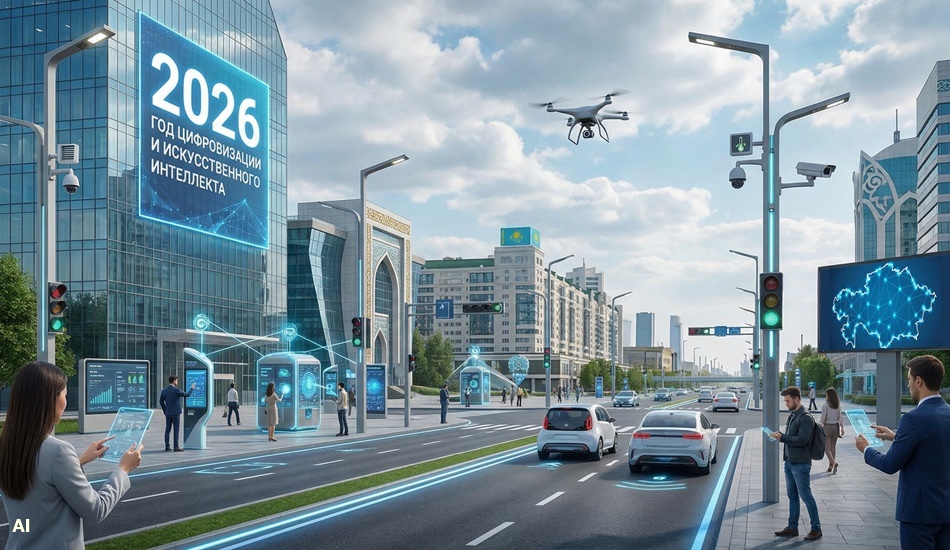
The image was created using AI and is for illustrative purposes only.
Kazakhstan is entering a new digital era: the country is moving from individual smart cities to the broader Smart Region concept, where technologies connect entire territories. This is not simply innovation or a fashionable term; it is a new management model that takes into account the economy, climate, infrastructure and people’s quality of life. Data, analytics and artificial intelligence are becoming part of everyday life: they help simplify daily tasks, feel the pulse of a city and region, improve governance and create a comfortable space for residents.
From Smart City projects to Smart Region
In recent years, the first Smart City projects have appeared in Kazakhstan. They have covered transport, housing and utilities, safety, public services and urban monitoring. Residents have already felt the advantages of digital technologies: queues have become shorter, abnormal situations are prevented faster, and city management has become more transparent and efficient.
On the basis of these pilots, the country is taking a natural step forward toward Smart Region. This is a model in which digital governance extends to entire territories, not only individual cities. Smart Region is built on a unified national standard of digital development that includes 16 areas and 90 performance indicators. According to the 2025 achievements report of Kazakhstan’s Ministry of Artificial Intelligence and Digital Development, this makes it possible to track regional progress and make management decisions based on comparable data.
President Kassym-Jomart Tokayev paid special attention to digitalization by declaring 2026 the Year of Digitalization and Artificial Intelligence. Digitalization is considered not an end in itself, but a tool for economic and infrastructure development and for improving the quality of life in cities and regions.
Smart City in Europe: rankings, technologies and examples of urban development
International experience clearly shows how the Smart Region concept works in practice. In Europe, for example, digitalization is developing around territories, not only administrative boundaries.
Smart cities represent the future of urbanization in Europe: they are connected, sustainable, digital and capable of improving the quality of urban life. With support from European Union funding, European capitals are implementing increasingly innovative solutions to address environmental and social challenges.
The Smart City concept, which emerged in the last century, has evolved alongside digital technologies. In Europe, it is understood as improving lighting, heating, water supply and waste management, increasing safety and convenience in the urban environment, and making administration more efficient and inclusive. All this is enabled by data and technologies such as IoT, Big Data, 5G, cloud solutions and AI.
International rankings are used to assess the dynamics of digital development in territories. One of the most significant is the Smart City Index, compiled annually by the Smart City Observatory at the IMD World Competitiveness Center together with the Singapore University of Technology and Design. In 2025, the IMD Smart City Index included 146 cities around the world, assessing their ability to harmonize technology and quality of life based on citizen surveys. The ranking analyzes five areas: activities and opportunities, governance, mobility, health and safety, and employment.

Image: IMD Smart City Index 2025. AI-generated and for illustrative purposes only.
Intelligent transport systems
Transport is one of the key areas of digitalization. Every day, thousands of vehicles move through cities, regions and between them. In Kazakhstan, companies are already implementing photo and video violation detection systems and other hardware and software solutions. In Europe, the focus is shifting toward intelligent transport systems (ITS), which help manage flows, improve safety and integrate different modes of transport.
Cooperative intelligent transport system projects, such as MATIS, X4ITS, ACUMEN, SYNCHROMODE, DELPHI and CONDUCTOR, demonstrate how smart traffic lights, sensors and monitoring systems help reduce congestion, cut emissions and improve the resilience of transport networks at the urban, regional and international levels.
Kazakhstan on the path to Smart Region
All of the international projects mentioned show that integrating digital services into the daily life of cities and regions makes it possible to create manageable, safe and sustainable territories. In Kazakhstan, the international INTEGRA CITY Group of Companies acts as a potential technology partner, bringing global experience in the digitalization of cities and regions.
The company specializes in the development, implementation and comprehensive support of Smart and Safe City systems. INTEGRA CITY is a universal ecosystem that combines an AI-managed set of modern platform solutions for digitalizing key aspects of life in settlements of any scale.
According to company representatives, Kazakhstan has strong potential for implementing comprehensive digital solutions: dynamically developing cities coexist with broad regional centers where digitalization can improve quality of life, simplify infrastructure management and accelerate data-driven decision-making.
Southern regions are of particular interest, including the Almaty and Zhetysu regions, where digitalization is developing in parallel with infrastructure and transport. These territories are becoming natural platforms for testing and scaling Smart Region. Thanks to economic activity, human capital and emerging production clusters, the Smart Region model becomes a competitive advantage, stimulating investment and improving governance. For residents, this means reducing the gap in access to modern services between megacities and regional centers.

The image was created using AI and is for illustrative purposes only.
“The Smart City and Smart Region concepts are not about fines or video cameras. In reality, they represent a new approach to territorial management, where decisions are based on data and analytics. Technology should help people. Yes, fines may occur, but it is important for everyone to understand that this is about safety. People already see that technology makes life simpler and more comfortable, and trust in services is growing. In the cities where we work actively, we try to interact closely with the population, create dialogue and launch social programs so that people gradually see the benefits themselves. For Kazakhstan’s regions, this is especially important, so that people have the same opportunities as in large cities,” says Ilya Belyakov, Director of the Technical Department of INTEGRA CITY Group of Companies.
The transition to the Smart Region model in Kazakhstan opens real opportunities for residents across the country, not only in major cities. As 2026 has been declared the Year of Digitalization and Artificial Intelligence, technologies are beginning to bring practical benefits to people: simplifying interaction with services, improving convenience and safety, and making infrastructure management transparent. As a result, residents of regions can experience the same opportunities and comfort as urban residents, while digitalization gradually becomes part of everyday life.

Photo: City of Bishkek.
The future is truly not far away — it is already on the streets of our cities. Smart traffic lights adapt to vehicle flows and regulate traffic, facial recognition cameras help monitor public safety, and intelligent metering systems save electricity and water.
The global Smart City trend has long ceased to be science fiction, and now it is gradually taking shape in our country as well. Behind the big words about digitalization is real work — from infrastructure modernization to the implementation of intelligent systems and pilot technology projects. All of this is shaping a new urban landscape where technologies become part of everyday life.
In this article, we examine how Kyrgyzstan is catching up with world leaders in creating digital cities, what solutions are already being implemented and what prospects are opening up for cities and residents in a future being built today.
A global course toward intelligence
Just ten years ago, the idea of a smart city seemed like a futuristic prediction from films about the future. Today, it is a new reality in which the world’s largest economies are actively investing. According to Global Market Insights, the global smart city solutions market was valued at USD 634 billion in 2024 and could grow to USD 2.74 trillion by 2034, with an average annual growth rate of 15.8%.
Global market size of Smart City solutions
This rapid growth is easy to explain: cities are expanding, technologies are developing, and people increasingly expect comfort, safety and environmental responsibility from the urban environment. Urbanization, digitalization of infrastructure and the introduction of the Internet of Things (IoT) are becoming key drivers of a new urban era.
In many countries, governments are prioritizing smart and sustainable development programs. Although Kyrgyzstan’s cities are not comparable in technological sophistication to megacities such as Singapore or Dubai, the country is confidently moving in the same direction. Here, digitalization of the urban environment is ceasing to be a buzzword and gradually becoming concrete action: the introduction of intelligent traffic management systems, video cameras, metering and monitoring systems, and solutions that improve citizens’ quality of life.
What is behind the Smart City concept and why does Kyrgyzstan need it?
A Smart City is not simply a city filled with technology. It is a living ecosystem where data, innovation and people interact with one another. Modern technologies make it possible to improve city services, save resources, reduce costs and organize infrastructure so that everything — from transport to lighting — operates efficiently and benefits residents.
Key areas of a smart city include:
- Transport and mobility — smart traffic lights, traffic monitoring and digital parking reduce congestion and make movement faster and more convenient.
- Energy and environment — energy efficiency and emissions control systems help conserve resources and protect the environment.
- Safety — intelligent video cameras and data analytics increase the level of protection for citizens.
- Digital services for citizens — e-services, online payments and city applications make interaction with authorities simpler and more transparent.
- Infrastructure management — digital monitoring helps identify and solve urban problems in a timely manner.
Ilya Belyakov, Director of the Technical Department of INTEGRA CITY Group of Companies, notes: “For Kyrgyzstan, Smart City is a response to the challenges of the time. The country is urbanizing, cities are growing, and infrastructure requires new solutions. Smart technologies make it possible not only to improve quality of life, but also to manage limited resources more effectively. It is important to think strategically and comprehensively about building a city digital ecosystem, while also applying an approach that takes into account international practices and local specifics.”
Who is setting the pace in Smart City today?
When looking for a benchmark smart city, Singapore almost always appears at the top of the list. Here, technology has become part of the city’s DNA. The Smart Nation initiative brings transport, healthcare, safety and energy into a single digital ecosystem and makes governance comprehensive.
Another prominent example is Barcelona, one of the pioneers in the use of IoT technologies. Thousands of sensors across the city monitor lighting, parking and air quality. The result is millions of euros in utility savings and a noticeable improvement in environmental standards.
Seoul is actively developing digital government: citizens can receive most services online, while city administration uses real-time data for decision-making.

Illustration: Global market size for Smart City solutions.
Among the key trends of 2025, several stand out in particular: the development of AI-driven transport, the creation of city digital twins, the introduction of smart waste processing systems and the scaling of green technologies.
The experience of global Smart City leaders shows that a smart city is evolving from a collection of sensors and screens into an integrated data-driven management system — transparent, flexible and human-centered.
Kyrgyzstan enters the era of digital cities
Not long ago, the idea of a smart city seemed like something from a futuristic film for Kyrgyzstan. Today, it is already a reality.
On the streets of Bishkek, Osh and other cities, video analytics and surveillance systems with facial recognition are already operating, along with traffic violation detection systems. Smart traffic lights and automated traffic management systems help regulate vehicle flows and reduce congestion. In the capital alone, 21 intersections are already connected to the system, with another 27 planned. Across the country, more than 4,000 video cameras monitor safety in real time, including cameras using facial recognition technology. On the instructions of Sadyr Japarov, their number is planned to be increased to 20,000 under the Safe Country project.
At the same time, digital urban infrastructure is developing: smart parking integrated with the Autoevacuator system is emerging, pilot projects of interactive bus stops are being launched, and smart water and electricity meters automatically transmit readings and save resources.
Urban digital services are also improving — from electronic public services to online utility payments and mobile applications that allow residents to report infrastructure problems. Government structures, including education, healthcare and law enforcement, are gradually moving into the digital space, becoming more efficient and accessible for citizens.
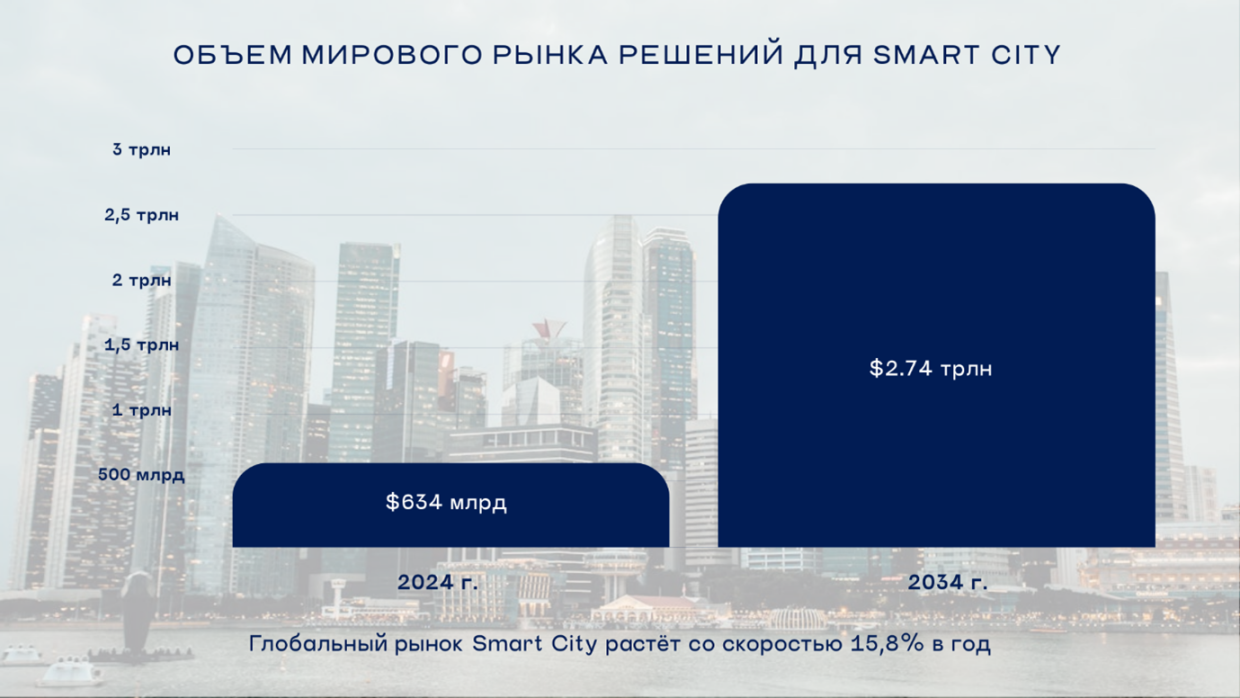
Illustration: examples of Smart City solutions implementation in cities around the world.
Kyrgyzstan’s second-largest city, Osh, is keeping pace with the capital in the digitalization of urban infrastructure. On Osh roads, the Safe City component of the Smart City project is operating, including devices that detect traffic violations. Under the Safe Country project, facial recognition cameras help prevent crises and fight crime. The digitalization of electricity metering has also been fully completed: in autumn, the installation of smart meters in the southern capital reached 100%. In February this year, President Sadyr Japarov laid a capsule at the foundation of the Osh City IT town, which is intended to become the country’s technology hub with developed smart city infrastructure.
The large-scale project of Asman, a fully ecological and smart city on the shore of Issyk-Kul, is giving new momentum to the Smart City movement. Plans include the introduction of advanced technologies: electric vehicles and electric public transport instead of gasoline-powered cars, smart homes with energy-saving and automated management systems, digital infrastructure monitoring, automation of utility management and environmental control. Asman City embodies a new era in the development of Kyrgyzstan’s cities.
The concept of smart cities opens the way for large-scale economic change in Kyrgyzstan. With the active development of the IT sector, government support and international experience, the country has every chance to become a regional leader in digital transformation. A smart future is being laid in the present — and it is not a luxury for megacities, but a necessary tool for sustainable development that helps countries and cities of any scale use resources rationally, improve safety and enhance people’s quality of life.
Kyrgyzstan is entering a phase of active urbanization. According to UN forecasts, the share of residents living in the country’s large cities will grow to 43.4% by 2050. Bishkek’s new master plan assumes that the capital’s population will approach 2 million people by that time. These figures mean not simply urban growth, but a deep transformation of the economy and way of life.
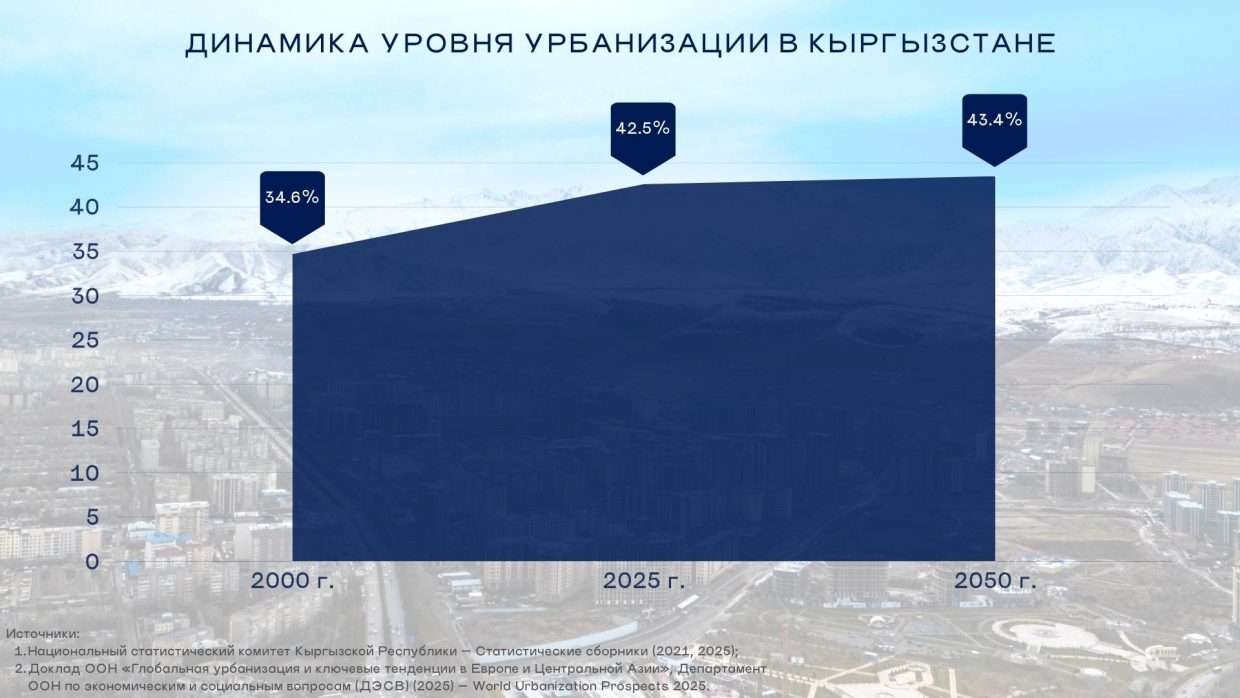
Illustration: dynamics of the level of urbanization in Kyrgyzstan.
Urbanization usually serves as an important driver of socio-economic progress. The concentration of people and businesses in cities contributes to GDP growth, higher labor productivity, the development of small and medium-sized enterprises and the creation of new jobs. Cities provide broader access to education, healthcare, cultural life and innovation, becoming centers of IT startups, science, services and manufacturing. In the long term, this reduces population outflow from the country and helps build a sustainable economy.
However, as cities grow, chronic problems also become sharper: overloaded roads, rising street crime, inefficient management processes and bureaucracy. If these issues are not addressed systematically, they begin to slow economic growth and directly worsen quality of life for citizens. That is why digital and intelligent technologies are now coming to the forefront as tools for data-driven city management.
Urban problems as a point of growth
The rapid population growth of Bishkek, Osh and regional centers is sharply increasing the burden on transport infrastructure, utility services and government bodies. Management models formed decades ago do not scale to modern cities and new volumes of data. In these conditions, technology ceases to be a fashionable trend and becomes a condition for the “survival” of large cities.

Photo: Bishkek city.
Traffic congestion: how technologies relieve the streets
One of the most urgent and painful urban problems is road congestion. Ten-point traffic jams have already become an integral part of life in the capital. Their cause is not only the number of vehicles, but also chaotic movement and the lack of flexible traffic management. Modern technologies make it possible to move from static schemes to adaptive traffic control systems.
At several intersections in the capital, the Automated Traffic Management System is already operating, enabling real-time monitoring and regulation of traffic flows. The authorities of Kyrgyzstan also plan to introduce smart traffic lights with priority for buses and dedicated public transport lanes in Bishkek, Osh and a number of other cities — Manas, Talas, Tokmok, Batken, Naryn and Karakol. Such solutions increase the speed of public transport, make it more predictable and attractive for citizens, and in the long term reduce the number of private cars on the roads.
Traffic violation cameras installed under the Safe City project also play an important role. They not only improve driver discipline, but also reduce accident rates by making punishment inevitable. Representatives of the monitoring center of the Road Safety Department of the Ministry of Internal Affairs reported that the number of road accidents in Bishkek areas where hardware and software complexes were installed decreased by 3.5%, and in Chuy Region by 14%.
Crime and safety: the city under digital protection
Growing population density inevitably requires new approaches to ensuring safety. The traditional model based on reacting after the fact is becoming insufficient. It is being replaced by data-based prevention.
The Safe City and Safe Country projects are already demonstrating tangible results: since 2021, the number of crimes in Kyrgyzstan has decreased by 69%. Video surveillance cameras and video analytics systems help not only record offenses, but also solve crimes — including high-profile ones — in hot pursuit.
Integrating video cameras with emergency services shortens response times, while the presence of video surveillance reduces street crime in controlled areas. As a result, a safer urban environment is formed, where technology works not as an instrument of total control, but as a mechanism of protection and prevention.
Bureaucracy: from queues to a service-oriented state
Another challenge for growing cities is bureaucracy. By decree of the President of the Kyrgyz Republic, a debureaucratization program has been implemented since last year. It is aimed at reducing procedures, eliminating excessive certificates and requirements, accelerating the provision of public services, transitioning to digital document management through the Tunduk system and improving the efficiency of the civil service.
Digitalization is becoming the key to reducing the burden on both government bodies and citizens. In 2025, public service centers received 3.6 million requests, of which 527,000 services were provided digitally. Today, more than 190 public services are available on the Tunduk platform, and the application itself has around 3 million users. Digitalization is gradually covering all areas of government. This means fewer visits to agencies, less human factor and greater transparency.
The transition to a service-oriented state changes the very philosophy of interaction: the state becomes a convenient provider of services rather than a source of barriers for business and citizens.
Bishkek city. Author of the photo: Nikolay Gladkov.
The city of the future: where digitalization is heading
Despite progress, the path toward a smart city in Kyrgyzstan remains challenging. Key obstacles include fragmented solutions, a shortage of personnel and the need for infrastructure development. The next important stage is the integration of transport, safety systems and public services into a single digital platform where data works together. To achieve this, the state is joining efforts with technology partners that help accelerate the construction of the country’s digital economy and share international practices.
According to Ilya Belyakov, Director of the Technical Department of INTEGRA CITY Group of Companies, for citizens a “smart city” is not simply sensors and video cameras, but reduced congestion, faster services and improved safety. Cities most often face not a lack of technology, but a lack of integration between technologies and, as a result, inefficiency. Modern technologies make it possible to unite data in a single management platform, anticipate problems before they occur and respond to them more intelligently.
Big data and artificial intelligence are showing particular promise in solving old problems. They make it possible to move from “patching holes” to forecasting issues. According to Minister of Digital Development Azamat Zhamangulov, the capacities and infrastructure necessary for introducing AI into the work of government bodies and businesses will become available in Kyrgyzstan as early as 2026.
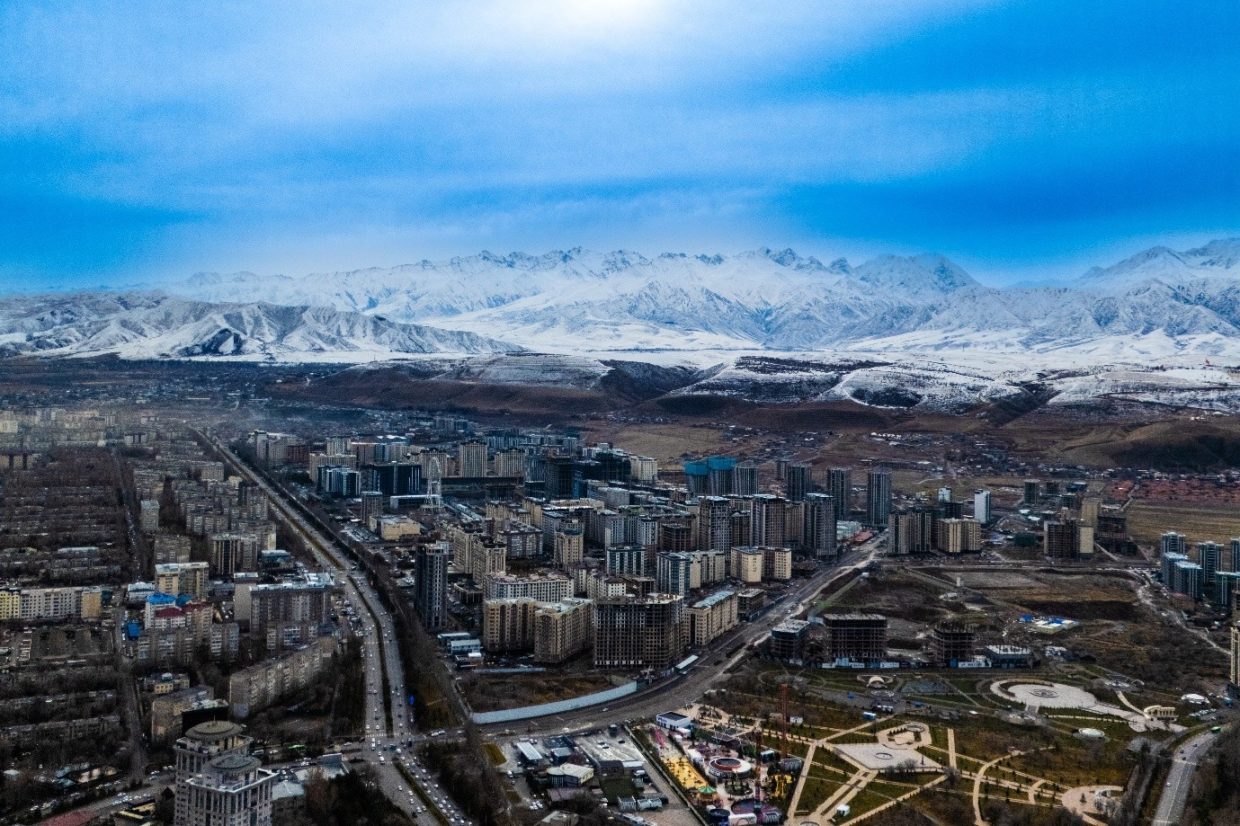
Bishkek city. Author of the photo: Nikolay Gladkov.
Urbanization in Kyrgyzstan is not a threat, but an opportunity — provided that urban growth is accompanied by smart management, digital solutions and a focus on data. Technologies do not replace city management, but they make it more efficient, transparent and scalable.
In this context, traffic congestion, crime and bureaucracy cease to be unsolvable problems and become manageable processes. This means that Kyrgyzstan’s cities have a chance to become not only larger, but also more convenient, safer and economically sustainable.