
With the start of the new academic year, more than 1.5 million schoolchildren in Kyrgyzstan took their seats at desks — or, more precisely, opened laptops, logged into electronic diaries and became part of a rapidly developing digital school environment.

Photo: Pexels / Katerina Holmes.
As Minister of Education Dogdurkul Kendirbaeva emphasized, September 1, 2025 was not just a date — it opened a new chapter in the development of education in the country. This year has been marked by major changes: the transition to a 12-year education system and the large-scale introduction of digital solutions into the school environment.
Digital tools are becoming an integral part of school life: from internet access and laptops to online diaries, electronic textbooks and smart safety systems. The goal of this transformation is clear — to create a school that is not only modern and convenient, but truly safe. Let us look more closely at the technologies behind these changes.
Digital foundation: equipment and internet as the new school reality
A digital school begins not with programs and applications, but with what can be seen with the naked eye — computers, laptops and internet access.
Today, more than 27,000 teachers have received Altyn-Kazyk laptops, and this number is expected to double in the near future. Computer classrooms are opening in schools across the country, and more than 95% of educational institutions are already connected to the internet. This means that more and more schoolchildren are gaining access to electronic diaries, online lessons and interactive educational platforms.
Electronic diary, online enrollment and digital certificate — the school of the future is already here
Digital transformation has affected everyone: students, parents and teachers.
Today, a child can be enrolled in school online through the Mektep portal or the Tunduk application, without queues or paperwork. All personal files are stored electronically, which simplifies transfers between schools and access to student records.
Paper diaries and journals are becoming a thing of the past, replaced by E-Kundoluk. This is a full-fledged digital tool where teachers enter grades, record schedules and attendance, leave comments online, and parents and students receive prompt access to information about academic performance and timetables.
For learning, students can use the Sanarip Kampa platform with interactive materials and Oku Kitebi, an online library of all textbooks available free of charge and without internet access. Starting in 2025, certificates and diplomas can also be obtained in electronic format through Tunduk.
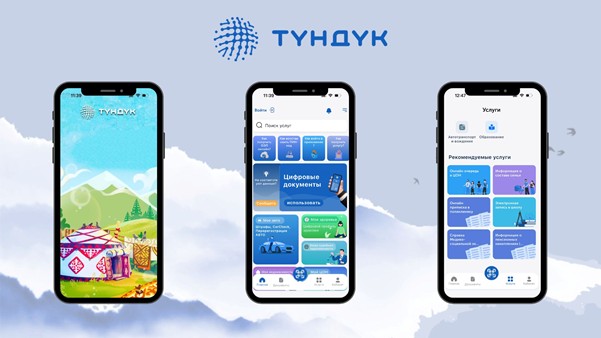
Photo: Tunduk app.
For those who cannot attend regular classes due to health, distance or other reasons, the Tunguch project — the first national online school — began operating in 2025. Its format is close to regular classes, but adapted to online learning opportunities. This is not simply a temporary solution, but a full-fledged tool for creating an accessible and flexible educational environment across the country.
Teachers at the center of change: training and digital tools
A digital revolution in schools is impossible without those who stand at the blackboard every day — teachers. More than 26,000 teachers, as well as all principals and deputy principals, have completed professional development courses and are prepared for the new academic year.
At the educational forum “Zhanalykten Zharchysy,” teachers were introduced to updated standards, new teaching methods and modern digital tools, including elements of artificial intelligence.
During the summer, a series of seminars was also held on working with key platforms — Sanarip Kampa and E-Kundoluk — organized by the Ministry of Education together with the developer company Ulut Soft.
According to the Ministry of Education of the Kyrgyz Republic, the teaching profession remains in demand, and digitalization is making it more modern and attractive, as the number of students in pedagogical programs continues to grow.
Safety as the foundation of trust: school as part of a smart city
No matter how modern a school is, safety remains its key element. Without peace of mind and confidence in protection, it is impossible to create conditions for successful learning.
That is why the Government of Kyrgyzstan is actively investing in the creation of a reliable and well-designed school safety system. In 2025, more than 100 schools in Bishkek were equipped with video surveillance cameras with facial recognition, panic buttons and systems integrated with the Ministry of Internal Affairs situation center. At a parliamentary meeting in April, Deputy Minister of Education and Science Nadira Jusupbekova stated that video cameras cover around 80% of the country’s educational institutions, and this process is constantly expanding.
Installing video cameras in schools and surrounding areas not only increases student safety, but also helps strengthen discipline and reduce conflicts, aggression and violence. Modern technologies, including facial recognition, make it possible to promptly detect offenses and prevent potential threats from escalating — for example, identifying convicted persons or terrorists on school premises. Today, all school video cameras are connected to the Ministry of Internal Affairs’ Safe Country system, ensuring continuous monitoring of threats and rapid response.
However, safety is not only about internal video surveillance. It is equally important that children feel protected not only inside the school, but also on their way to and from school. Experts from INTEGRA CITY, a company specializing in digital solutions for urban infrastructure, utilities, transport and administrative services, emphasize that the modern school is becoming part of a smart urban environment where technologies work as a whole.
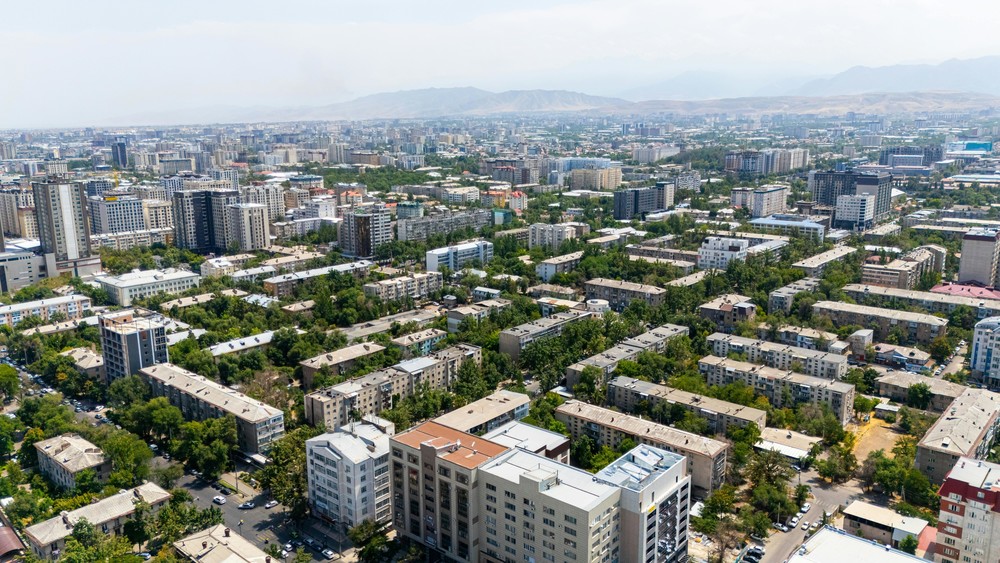
Photo: Bishkek city.
For example, the INTEGRA platform includes video surveillance with real-time intelligent analytics, which can promptly detect strangers in schools and track cases of bullying or disciplinary violations. Such data not only helps maintain a safe and healthy atmosphere for learning and communication, but also provides important insights for developing programs that improve academic performance and students’ personal development.
The integration of video surveillance with emergency services and smart street lighting provides comprehensive protection for schoolchildren at every stage of their journey — on the street, in transport and on school grounds. In this way, student safety is viewed not only as an internal responsibility of educational institutions, but as part of comprehensive urban infrastructure.
In addition, modern technologies make it possible to respond quickly to incidents and prevent risks everywhere. Continuous analysis of behavior and events helps create adaptive support measures, making schools truly digital and focused on each student’s needs.
Another important advantage of the platform is its flexibility: it can easily adapt to existing infrastructure and technologies, or, if necessary, be built fully from scratch to provide a comprehensive modern safety solution.
Pavel Loran, Head of the Representative Office of INTEGRA CITY Group of Companies in Central Asia, commented on this topic: “Modern digital technologies open up new opportunities for comprehensive child protection. Our solutions help cities and schools build an effective safety system that operates around the clock and covers all aspects of schoolchildren’s lives — from classes to a safe journey home. We would be glad to become part of Kyrgyzstan’s large-scale digital transformation in education and are ready to support the further development of these systems.”

Photo: Pavel Loran, Head of the INTEGRA CITY Group of Companies’ Representative Office in Central Asia.
The changes taking place in Kyrgyzstan’s schools today are not merely a technical upgrade, but a deep digital reform of education. It covers everything from internet access and digital educational platforms to teacher training and the creation of advanced safety systems. These technologies do not replace teachers and textbooks, but they make learning more accessible, flexible and safe. Most importantly, they create conditions in which every child can feel confident and protected — whether in the classroom, at home or on the way between them.
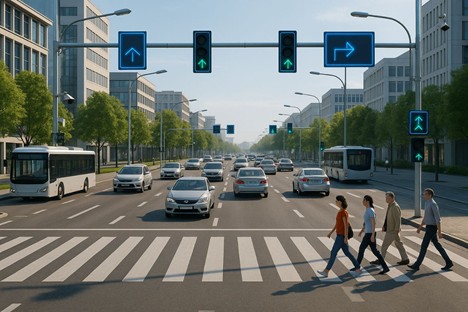
The image was created using AI and is for illustrative purposes only.
Which solutions help collect data from sensors and devices and forecast possible infrastructure issues?
Kazakhstan is taking confident steps in developing smart cities, where technology is becoming not merely an automation tool, but a condition for comfortable and safe living.
According to the 2024 results of the ranking by Kazakhstan’s Ministry of Digital Development, Innovation and Aerospace Industry, Astana, Almaty and Karaganda became the leaders. Interestingly, five years ago Almaty held the top position, but today the top three demonstrate the steady development of digital infrastructure across the country.
The priorities of smart cities in Kazakhstan have remained consistent since 2019, when the reference standard was approved. Safety, transport, housing and utilities, education, healthcare and city management are the key areas where high-tech solutions are being implemented. Local authorities actively use school performance monitoring systems, electronic fare payment, online clinic appointments and citizen request platforms such as the 109 contact center.
However, a modern smart city is not simply a collection of sensors and cameras. It is an ecosystem in which residents become active participants in change. Next-generation digital platforms make it possible not only to collect technical data, but also to take into account citizens’ opinions, complaints and proposals. This forms a new model of interaction, where everyone can influence the development of the urban environment.
Anticipation instead of reaction
Modern technologies allow the city to be seen as a living organism. Systems analyze data on lighting, waste accumulation, public transport operations and even identify high-risk intersections. This makes it possible not only to eliminate problems, but to prevent them. For example, residents of the Almaty Region will be able to report illegal dumps or broken streetlights through a mobile application, while the system will automatically direct requests to the relevant services.
Today, a city is no longer merely a set of buildings and streets. It becomes a complex, interconnected ecosystem that lives and responds to residents’ needs in real time. Digital technologies not only record failures, but turn data into practical decisions, involving every resident in the creation of a comfortable and safe environment.
“If it becomes possible to report problems quickly and see the result, I would like the city of Konaev to become truly smart. Everything becomes simpler and clearer, which means more efficient,” says Maksat, a resident of Konaev, the administrative center of the Almaty Region.
Zhetysu Region: digital transformation according to plan
In the Zhetysu Region, digital transformation is developing within the framework of the Digital Kazakhstan state program, aimed at creating a modern, comfortable and high-tech region. Today, the region is laying a solid foundation for a modern digital urban environment that improves quality of life and supports economic development.
Projects being implemented include automation of public services in education, launch of the unified 109 contact center, and creation of a regional IT hub that is becoming a center of attraction for innovative technologies and young specialists. These are only part of the changes taking place: digital tools are being actively introduced in other areas as well, from healthcare to urban infrastructure.
In the coming years, active development is expected in intelligent transport systems, smart utility networks, smart lighting systems and data centers. These technologies will significantly improve the efficiency of municipal management, making transport more convenient and public services more transparent and accessible for residents.
It is reasonable to unite all digital solutions into one manageable platform that becomes a centralized mechanism for controlling and coordinating the work of different infrastructure facilities. Such integration will ensure prompt decision-making and rapid response to any changes, making regional management flexible and adaptive.
Special attention is being paid to energy-saving and environmentally friendly technologies. Smart lighting systems, in particular, reduce energy consumption and support the region’s sustainable development by improving the environmental situation and creating a comfortable living environment.

The image was created using AI and is for illustrative purposes only.
“It is important that the transport system truly meets the needs of citizens: routes should be well planned and trips should take as little time as possible. It is encouraging to see new digital solutions emerging. We want them to make getting around the city faster and more convenient, especially in the morning, when people need to take children somewhere or get to work,” says Ainur, a resident of Taldykorgan, the regional center of the Zhetysu Region.
She also notes that residents expect improvements in other areas of urban life as well: smart lighting will make streets safer at night, and modern digital solutions in housing and utilities, such as waste removal monitoring with resident notifications, will help improve cleanliness and order in courtyards. These are steps toward a convenient and modern urban environment where continuous dialogue with residents and consideration of real needs play an important role.
A digital ecosystem for the cities of the future
Kazakhstan is moving from fragmented digital services to comprehensive intelligent platforms, attracting well-deserved attention from countries both near and far abroad. Such integration makes it possible to unite key areas of urban life, including utilities, transport, safety and communication with residents, into a single system for more efficient management.
The market offers various technological solutions from international and local companies such as NEC, SAP, Huawei and others, which automate separate processes and services. Yet creating a single ecosystem where all city services work coherently and data is combined on one platform remains rare.
Residents receive convenient tools to interact with city services and greater opportunity to influence the development of the urban environment. The introduction of such integrated digital platforms is gradually shaping new standards in city management and urban-tech.
Pavel Loran, Head of INTEGRA CITY’s Representative Office in Central Asia, spoke about the future development of digital ecosystems and the implementation of such solutions in Kazakhstan.

Photo: Pavel Loran, Head of the INTEGRA CITY Group of Companies’ Representative Office in Central Asia.
“Advanced technologies are becoming a natural part of the urban environment: invisible in operation, but highly visible in their results. When systems work coherently and data is transformed into clear decisions, this creates a qualitatively new level of city service. This is exactly the benefit—measurable, specific and meaningful for every resident—that we make a priority in our solutions.”
The platform is being implemented in several cities of Kazakhstan. It brings together fragmented systems—lighting, transport, utilities and safety—into a single digital network. Connected sensors and devices collect real-time data about the environment and infrastructure. Within the platform, large volumes of data are then processed to forecast problems and support appropriate management decisions.
The speaker noted that implementing such integrated platforms in Kazakhstan could substantially improve city management and residents’ quality of life, ensuring faster and more transparent interaction between services and the population.
The Integra platform can unite municipal, transport and emergency services into a single operating system. It creates synergy between infrastructure, data and people, where each element strengthens the effectiveness of the others. As a result, cities receive not only optimized processes, but also a new level of quality of life for residents.
A smart city is not only about technology; it is also a platform for dialogue between authorities and residents. Data and citizen feedback brought together in one system make it possible to take informed decisions, making Kazakhstan’s cities more convenient, safer and more comfortable for life.
In 2025, Kyrgyzstan’s urbanization rate rose significantly, reaching almost 42%, which is 7% higher than two years earlier. Bishkek has also become one of Central Asia’s pilot cities for introducing elements of smart urban infrastructure.
On the path toward economic growth, cities are becoming key support points and regional centers of development. Today, Kyrgyzstan faces the task of fundamentally transforming its urban environment, where digitalization is an important — but not the only — component.
Pavel Loran, Head of the Representative Office of INTEGRA CITY Group of Companies in Central Asia — an international company implementing digital ecosystems and smart city technologies — explains what solutions are needed for comprehensive urban transformation in the country. In his view, genuine urban transformation requires an integrated approach combining three interrelated areas: deep digitalization of governance, physical modernization of infrastructure, and the creation of integrated solutions that connect technologies with physical assets.

Photo: Pavel Loran, Head of the INTEGRA CITY Group of Companies’ Representative Office in Central Asia.
What is needed today for a full and systemic transformation of cities?
“In our vision, cities — as the main points where population, infrastructure and resources are concentrated — have the greatest potential to launch systemic change. The foundation of transformation should be the creation of modern analytical centers capable of processing urban data in real time. These centers will become the ‘brain’ of city management, coordinating all services, from transport to utilities.”
However, their effectiveness directly depends on the quality of physical infrastructure. That is why large-scale infrastructure projects must be implemented in parallel: building modern transport interchanges, introducing paid parking systems with dynamic pricing, creating park-and-ride hubs and renewing road surfaces.
What challenges arise along this path?
“Today, the need to coordinate between different agencies and services is particularly challenging. Experience shows that the most effective solution is the creation of a unified coordination center that brings together municipal services, transport operators, utility providers and digital platforms. This approach helps avoid fragmented transformation and ensures comprehensive development of urban space.”
What can become the driver of global urban infrastructure transformation?
“A key condition for success is attracting a strategic partner-investor capable of ensuring the full implementation cycle — from design to long-term operation over 10–15 years. Only such a fundamental approach can guarantee the sustainability of transformation, gradual development of local competencies and continuous renewal of technological solutions.”
What does digital support for urban development include?
“Specific projects must be developed with mandatory consideration of their digital support. For example, paid parking requires convenient mobile payment applications with an integrated navigation system. New transport interchanges need intelligent traffic management systems. Modernizing public transport requires unified logistics and ticketing platforms. This integrated approach has already proven its effectiveness in various countries around the world.”
Is the creation of “smart cities” possible in the country’s current realities?
“Creating smart cities in Kyrgyzstan requires comprehensive digital transformation of urban infrastructure. The foundation should be modern telecommunications networks, including fiber optics and data centers integrated with smart energy grids. A key element will be the development of a city digital twin that can model transport flows, forecast infrastructure loads and optimize urban planning decisions.”
The transport system urgently needs intelligent solutions: adaptive traffic lights, digital information systems and mobile services for drivers. Particular attention should be paid to the construction of modern road interchanges and the use of innovative asphalt technologies, which can significantly improve road quality and reduce congestion.
Safety can be ensured through integrated video surveillance systems with real-time analytics and automated alerts to emergency services, complemented by energy-efficient smart lighting. At the same time, the digitalization of public services and utilities should be accelerated through unified platforms that are convenient for citizens.
Implementation of these measures will require a phased approach with mandatory adaptation of technologies to local conditions. In the long term, this will create the foundation for sustainable urban development and improved quality of life.
Photo: Bishkek, Chuy Avenue
Are the forecasts for urban transformation in Kyrgyzstan promising?
“Kyrgyzstan has all the necessary prerequisites for successful transformation: political will, a young technology-oriented population and an understanding of the importance of a systemic approach. Implementing such large-scale programs designed for the long term will make it possible to create a modern urban environment that is comfortable for life, where digital technologies serve not as an end in themselves, but as a tool to improve every citizen’s quality of life. Such a result is worth all the effort required to achieve it.”
Comprehensive urban transformation is not a set of disconnected initiatives, but a carefully designed strategy where digital solutions and infrastructure projects work as a single ecosystem. Kyrgyzstan has already taken its first steps, but the main changes are still ahead: creating effective urban “brain centers,” modernizing transport and engineering networks, and integrating services into convenient digital platforms. This approach will not only improve citizens’ quality of life, but also turn cities into points of economic growth, investment attraction and innovation. The key is to maintain a long-term goal and consistency of action, because these are what turn technological projects into a sustainable future for the whole country.
Today, one of the key development vectors in Kyrgyzstan is the country’s urbanization. At the beginning of 2025, Kyrgyzstan had a population of 7.3 million people, and almost every fifth resident lived in Bishkek. According to official data, the capital’s population reached 1,321,877 people, with further growth expected in the next couple of years.
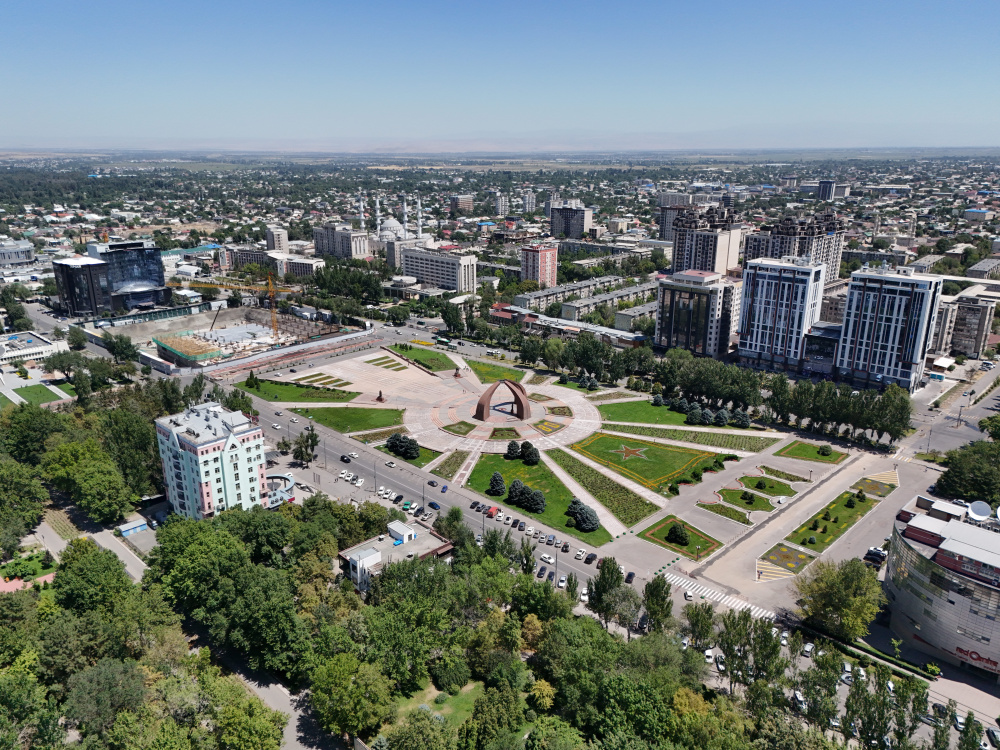
The city is changing, and the key question now is: what should Bishkek become in order to be comfortable and safe for everyone? The answer to this challenge is the development of inclusive safety as a new standard of the urban environment. Inclusivity means urban infrastructure designed and adapted to the real-life needs of all citizens, rather than an “average” resident.
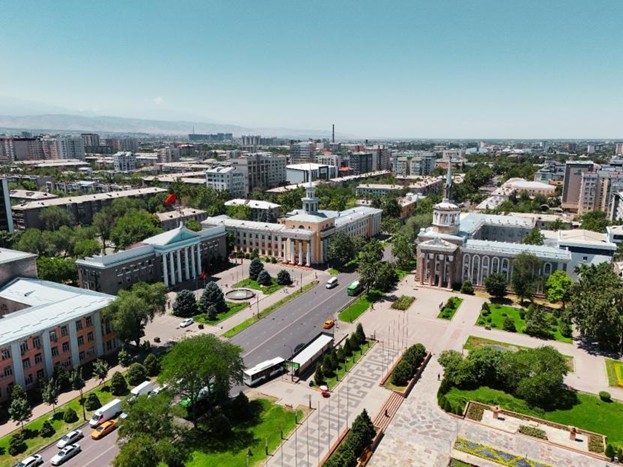
Photo: Bishkek, Ala-Too Square.
What everyday scenarios do residents face in a large city?
In everyday urban scenes, it is not difficult to imagine a mother with a stroller rushing on errands and having to walk around cars parked in the wrong place. Or an elderly person who is afraid to leave home in the evening because there is no street lighting and it is difficult to call for help in an emergency. It could also be a schoolchild walking home after classes along a road with no speed bumps and no street cameras. A person with a disability may face a range of difficulties in solving daily tasks because the city often simply does not take their needs into account.
A “smart city” as the technological foundation for inclusive safety
Inclusive safety is impossible without a reliable technological foundation. As the urban population grows, the idea of transforming the capital into a “smart city” is gaining momentum — a city where safety is not only a task for the police, but part of a technologically considered and human-centered environment.
A “smart city” is not only about the presence of video surveillance cameras. It is a systemic transformation: platform-based solutions that include all components of urban infrastructure, from safety systems to efficient transport and utility services, and allow cities to respond to issues before they escalate into crises.
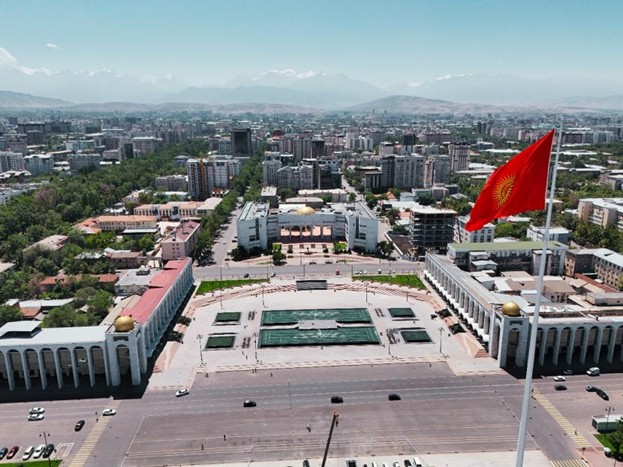
Photo: Bishkek, Chui Avenue.
This may sound futuristic, but it becomes realistic when public authorities work in partnership with advanced technology companies. For example, INTEGRA CITY, as one of the international leaders in the digitalization of the urban environment, offers an integrated approach: it brings transport, utility and administrative infrastructure together into a single smart ecosystem. The Integra digital platform collects data from multiple sources, turns it into valuable insights and directs it to where it can truly create value. This approach enables the integration of fragmented technologies into one coordinated network — from traffic and urban environment management to monitoring territorial infrastructure.
Digital urbanization — a solution for citizens
Creating a digital ecosystem for a metropolis makes it possible to manage urban processes and resources effectively in real time. For example, integration with transport systems helps manage traffic and reduce congestion, minimize road accidents, while safety and video surveillance systems ensure a rapid response to incidents and violations. Data on the condition of engineering networks, in turn, makes it possible to monitor and improve quality of life, efficiently manage street lighting, networks and water resources.
Citizens can control these processes through an application without leaving home. This reduces the distance between the population and the authorities, while also making solutions more accessible for people with limited mobility.

Photo: Pavel Loran, Head of the INTEGRA CITY Group of Companies’ Representative Office in Central Asia.
“We create feedback interfaces: mobile applications, online services and civic participation modules. This helps build an environment where the city hears every resident,” emphasizes Pavel Loran, Head of the Representative Office of INTEGRA CITY – FZCO Group of Companies in Central Asia. “Our mission is to create Safe and Smart Cities that become part of a unified digital platform for the country. We plan with a 10–15 year horizon, which allows us to consider future needs and ensure sustainable development. We use both our own experience and global trends to create solutions that simplify citizens’ lives and make them safer and more comfortable.”
Today, Bishkek is at a stage of significant transformation, where technology is viewed not only as innovation, but also as an effective tool for ensuring a fair and safe urban environment.
The metropolis has the potential to become one of those cities where digital infrastructure effectively serves the interests of everyone. To achieve this, it is important to entrust management to centralized systems capable of integrating all urban processes and providing comprehensive solutions to city challenges.

Photo: Women’s handball team “Alatau Arulary” from the Almaty region.
From May 14 to 19, 2025, the first round of the 33rd Championship of the Republic of Kazakhstan in handball among women’s Super League teams was held in the village of Otegen Batyr. Six of the country’s strongest teams took part: Astana, Altai-Vostok, Kaysar, Turan, KIVS Shymkent and Alatau Arulary, the pride of the Almaty Region.
This team became not only a sports participant in the tournament, but also a symbol of sustainable partnership between business and sport. Behind the girls’ achievements on the court stands INTEGRA CITY, the team’s partner, which believes in the power of women’s sport and places emphasis on social responsibility. Participation in the development of regional sport is an important investment in the future: it shapes public values and opens new horizons for talented athletes.
The women’s handball team Alatau Arulary from the Almaty Region.
More than a logo on the uniform
The partnership between INTEGRA CITY and Alatau Arulary is not a formality. It is about trust, real investment and confidence in the future. Thanks to the company’s support, the team received everything necessary for preparation and participation in the tournament: equipment, logistics and organizational resources. The support is felt in the details, from training conditions to away games.
“Cooperation with the Alatau Arulary handball team began in 2024. It became a logical continuation of our corporate social responsibility strategy focused on regional development. We saw in this project not just a sports initiative, but an opportunity to invest in young people’s future and support women’s sport in the Almaty Region.
The first step was to identify the team’s key needs. We held working meetings with club representatives to understand how we could be most useful. A support program was then developed, from financing uniforms and equipment to assisting with the organization of training and travel to competitions. This allowed the team to focus on sports preparation and improving results,” said Pavel Loran, Head of the Representative Office of INTEGRA CITY – FZCO Group of Companies in Central Asia.

Photo: Pavel Loran, Head of the INTEGRA CITY Group of Companies’ Representative Office in Central Asia.
Women’s sport as an example of equal opportunity
Today, Alatau Arulary is not simply a regional team, but an ambitious and motivated team playing for the future. For the girls, every match is a step forward; for the region, it is a story that shapes the image of women’s sport.
“In the first round, we demonstrated a good result: our tactics worked effectively. Although injuries in the team, as often happens in sport, affected the course of the game, we are determined to show our full potential in the second round,” says the team’s head coach, Zhanatty Bayarystanova.
“INTEGRA CITY provided us with important material assistance, which was noted by the head coaches and judges. We plan to improve equipment and uniforms and resolve organizational issues related to the hall and medical station. Our ambitious goal is to reach the Olympic level and compete with foreign handball teams. INTEGRA CITY’s support motivates the girls and gives momentum to the development of sport in the Almaty Region. We believe this example can inspire other companies to contribute to youth and professional sport,” Bayarystanova noted.

Photo: Head coach of the Alatau Arulary team Zhanat Arystanova.
A partnership with meaning
For INTEGRA CITY, this cooperation reflects its internal philosophy: to develop not only infrastructure, but also communities. The company focuses on long-term development: supporting the team, holding joint events and involving young people. Creating a positive environment is part of a sustainable growth strategy.
“We were inspired by the team’s energy and ambition. The Almaty Region is strategically important for our work, and we seek to support not only technological initiatives here, but also social ones. Women’s sport deserves more attention and support, and we see strong potential in Alatau Arulary, both athletic and social.
We see growing engagement and motivation within the team and a positive response from the local community: interest in handball is increasing, especially among young people,” Pavel Loran emphasized.
Technologies that change cities and communities
INTEGRA CITY is a socially responsible partner in sport and a flagship of digital transformation in the urban environment. The company is developing Integra, a universal digital platform that unites transport, utility and administrative infrastructure into a single smart ecosystem. Integra’s innovative products represent a next-generation technology solution that enables cities to become safer, more resilient and more comfortable for life.
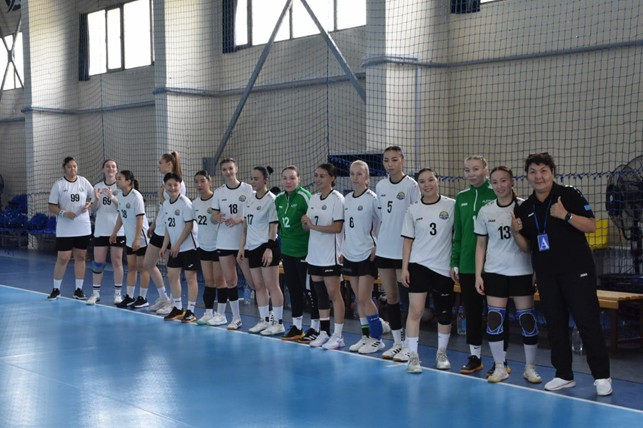
In the photo: Women’s handball team “Alatau Arulary” from the Almaty region.
The Integra platform collects data from various sources, from video surveillance systems and road sensors to climate sensors, and converts it into useful information that supports accurate and timely management decisions. It can be integrated into existing infrastructure or built from scratch for the specific needs of a region. The effect of implementation is measurable: fewer accidents, lower crime and more efficient use of resources.
Importantly, the platform can also integrate sports facilities into the overall city management system. This includes smart lighting, video surveillance, online venue booking, access control and the use of analytical data. All of this simplifies management and makes sport accessible and safe both for professionals and for ordinary residents.
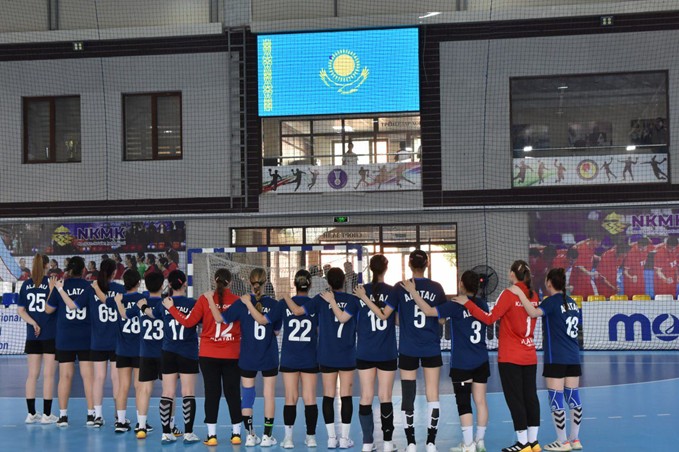
Photo: Women’s handball team “Alatau Arulary” from the Almaty region.
Sport is an important part of a healthy urban ecosystem. A smart city is not only about digitalization, but also about creating conditions for a healthy lifestyle, active recreation and social integration. Integra City seeks to make sport accessible to everyone through technology and well-designed infrastructure.
Forward to new games and new goals
New matches lie ahead, and Alatau Arulary will approach them with renewed strength and ambition. The girls have already proven that they can withstand pressure. With such support, they can also win.
Follow the news, support the team and share their stories. Women’s sport in Kazakhstan is growing, largely thanks to those who help it move forward.
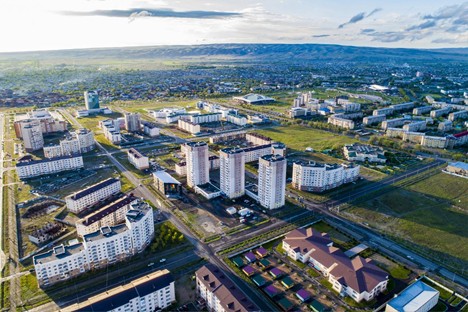
Pictured: Taldykorgan. This image is for illustrative purposes only.
Kazakhstan’s cities are steadily moving toward digital transformation. Modern technological solutions are appearing more frequently. Yet a truly smart system is not a set of separate technologies, but a coordinated ecosystem in which transport, safety, utilities and infrastructure work together. The Smart City concept is a practical tool for responding to the challenges of our time: population growth, pressure on infrastructure, and the need for transparency and efficiency.
Experts share their vision of how a smart city should be implemented: architect and urbanist Sanzhar Kaziyev, and Pavel Loran, Head of the Representative Office of INTEGRA CITY – FZCO Group of Companies in Central Asia.
Sanzhar Kaziyev: “Smart City is not about cameras, but about a culture of decision-making”
Sanzhar Kaziyev, Chief Architect of the Q88 Association for Sustainable Territorial Development, believes that in Kazakhstan the term “smart city” still often resembles an attractive slogan.
“Today, Smart City is most often understood as cameras and data collection. But cameras are only a tool. They do not solve problems unless there is a systematic approach and expert assessment behind them. We need not just cameras, but specialists who can interpret data. Only as a whole does this become a resource for decision-making,” Kaziyev says.
Digitalization, he emphasizes, should not be a reporting exercise, but a working management tool. If there is a traffic jam in the city, the key is not simply to install another camera, but to understand the reason and find a solution. In other words, a smart city is not about control, but about diagnostics.
Kaziyev notes that quick digital fixes are often used instead of a systematic approach to urban planning. However, he believes Kazakhstan is at a point of potential growth. The emergence of urban planning cadastres, digital data and new tenders are positive signals. Still, digitalization should cover not only security or utilities, but all urban planning.

Photo: Sanzhar Kaziyev, chief architect of the public association of urbanists “Association for Sustainable Development of Territories Q88”.
The expert also stresses the importance of public dialogue. In his view, people should understand that a smart city is not surveillance, but a tool for improving the quality of the urban environment. Surveys should be conducted and behavior studied: where people work, how they move around and how they spend their free time. This makes it possible to understand real needs and build infrastructure around people.
Kaziyev concludes that Smart City is not a set of cameras, but a culture of conscious decisions. Kazakhstan needs not simply digitalization, but real urban transformation: human-centered, logically structured and sustainable.
How can a city be brought into one digital system?
Fragmented measures such as installing cameras or connecting smart traffic lights do not create a real smart city. A comprehensive transformation is required: well-designed infrastructure, trained specialists, an engaged population and a technology platform that brings everything together.
Companies specializing in such ecosystems increasingly offer universal turnkey tools, from equipment connection and infrastructure deployment to software development and staff training. One example is INTEGRA CITY, a group of companies offering a platform that unites city services into a single digital environment where decisions are made based on data rather than assumptions.
Pavel Loran, Head of the Representative Office of INTEGRA CITY – FZCO Group of Companies in Central Asia, believes that creating a smart city should begin with a mission: systematic transformation, not technological experiments.

Photo: Pavel Loran, Head of the INTEGRA CITY Group of Companies’ Representative Office in Central Asia.
“Our goal is not simply to introduce innovations, but to build a sustainable digital environment where all elements of urban life interact with each other. A smart city is first and foremost an ecosystem: transport, safety, utilities, communications, ecology and administration united in one architecture. When all data flows into one platform, it becomes possible not only to respond promptly, but also to forecast, plan and develop strategically,” Loran explains.
INTEGRA CITY assesses each region individually when considering where its solutions may be deployed. The company takes into account climate, population density, transport infrastructure and digital maturity. For actively developing areas such as the Almaty and Zhetysu regions, special attention is paid to transport connectivity, safety and infrastructure quality.
“We do not copy solutions. Each project is adapted to a specific urban context. That is why the INTEGRA CITY platform scales flexibly, allowing both large agglomerations and smaller towns to be connected,” the expert notes.
Speaking about the company, Loran emphasizes that INTEGRA CITY aims to become part of Kazakhstan’s systematic digital development. The company’s platform can unite municipal and emergency services, improve management of utility resources, increase process transparency and improve the quality of public services.
The INTEGRA CITY strategy places special emphasis on cooperation with the state. According to Loran, deep integration of the platform into existing processes is possible only in partnership with public authorities. At the same time, digital tools must be intuitive and useful, while residents should become active participants in the transformation.
“We create feedback interfaces: mobile applications, online services and civic participation modules. This helps build an environment in which the city hears its residents,” he says.
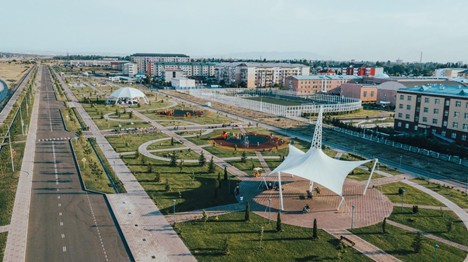
Pictured: Taldykorgan. Image by Zhenis Iskabay. Image is for illustrative purposes only.
The company’s experience has already been implemented in several countries in Latin America and Africa. In Kazakhstan, INTEGRA CITY plans active expansion, including cooperation with small and medium-sized cities, development of local teams and integration of new technological solutions.
“We believe Kazakhstan is ready for a systemic leap. There is demand, potential and a window of opportunity here. Our task is to offer not simply a digital platform, but a development logic in which every city is a manageable, sustainable and understandable system,” Pavel Loran summarizes.
Thus, the digital transformation of cities in Kazakhstan requires deep and systematic work. Only integrated platforms combined with a cultural approach can create a comfortable and safe environment for life and urban and regional development.