
Kyrgyzstan is entering a phase of active urbanization. According to UN forecasts, the share of residents living in the country’s large cities will grow to 43.4% by 2050. Bishkek’s new master plan assumes that the capital’s population will approach 2 million people by that time. These figures mean not simply urban growth, but a deep transformation of the economy and way of life.
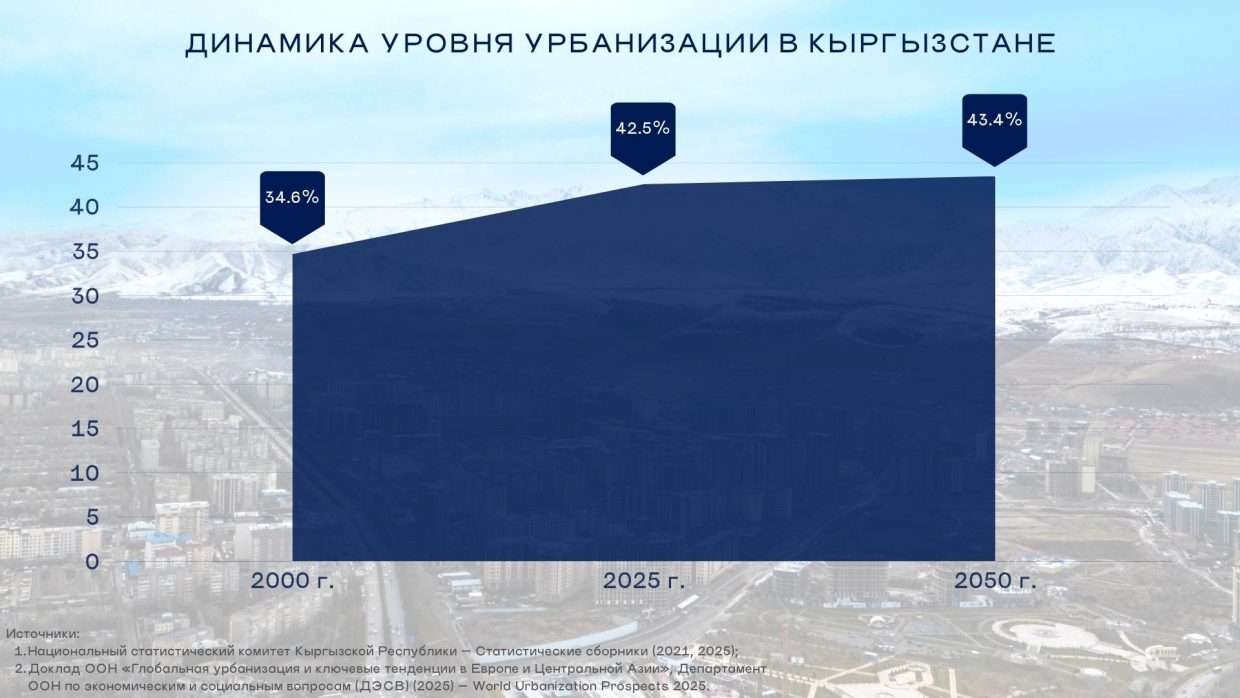
Illustration: dynamics of the level of urbanization in Kyrgyzstan.
Urbanization usually serves as an important driver of socio-economic progress. The concentration of people and businesses in cities contributes to GDP growth, higher labor productivity, the development of small and medium-sized enterprises and the creation of new jobs. Cities provide broader access to education, healthcare, cultural life and innovation, becoming centers of IT startups, science, services and manufacturing. In the long term, this reduces population outflow from the country and helps build a sustainable economy.
However, as cities grow, chronic problems also become sharper: overloaded roads, rising street crime, inefficient management processes and bureaucracy. If these issues are not addressed systematically, they begin to slow economic growth and directly worsen quality of life for citizens. That is why digital and intelligent technologies are now coming to the forefront as tools for data-driven city management.
Urban problems as a point of growth
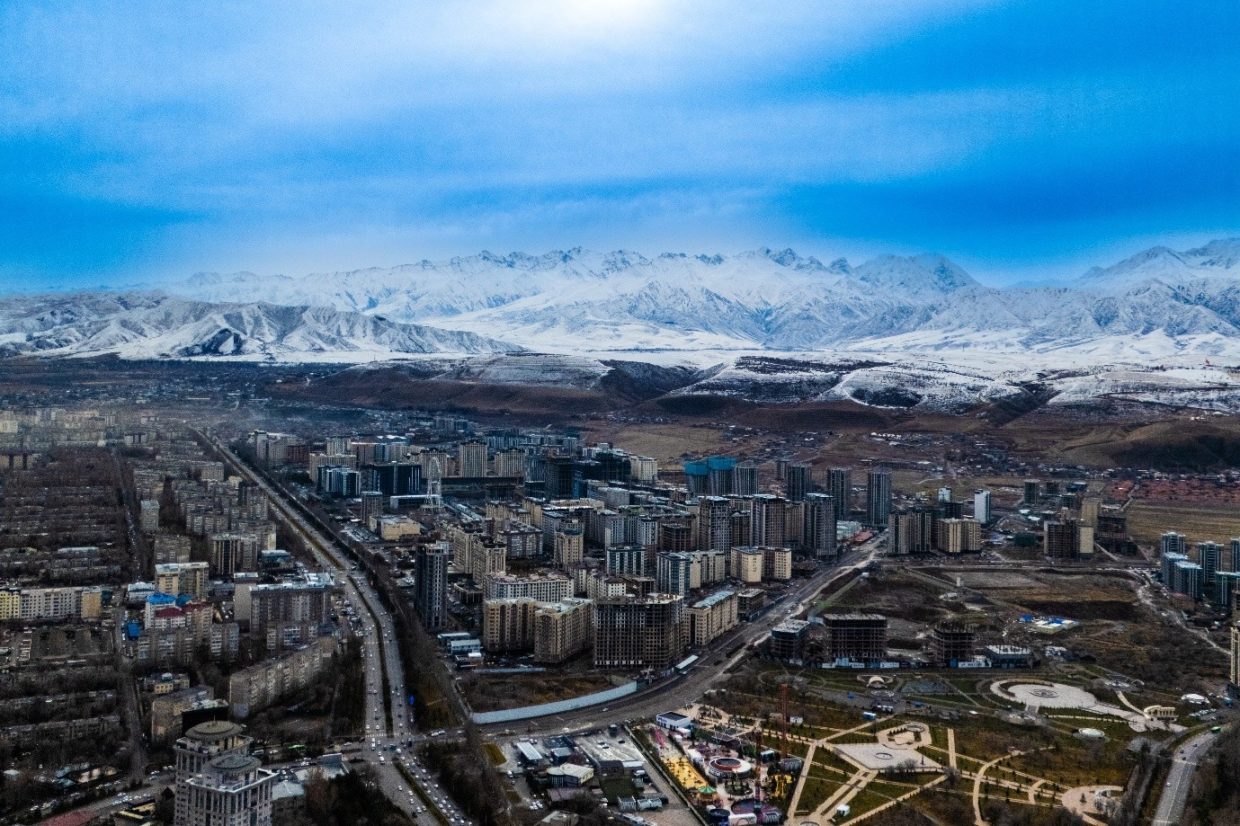
The rapid population growth of Bishkek, Osh and regional centers is sharply increasing the burden on transport infrastructure, utility services and government bodies. Management models formed decades ago do not scale to modern cities and new volumes of data. In these conditions, technology ceases to be a fashionable trend and becomes a condition for the “survival” of large cities.

Photo: Bishkek city.
Traffic congestion: how technologies relieve the streets
One of the most urgent and painful urban problems is road congestion. Ten-point traffic jams have already become an integral part of life in the capital. Their cause is not only the number of vehicles, but also chaotic movement and the lack of flexible traffic management. Modern technologies make it possible to move from static schemes to adaptive traffic control systems.
At several intersections in the capital, the Automated Traffic Management System is already operating, enabling real-time monitoring and regulation of traffic flows. The authorities of Kyrgyzstan also plan to introduce smart traffic lights with priority for buses and dedicated public transport lanes in Bishkek, Osh and a number of other cities — Manas, Talas, Tokmok, Batken, Naryn and Karakol. Such solutions increase the speed of public transport, make it more predictable and attractive for citizens, and in the long term reduce the number of private cars on the roads.
Traffic violation cameras installed under the Safe City project also play an important role. They not only improve driver discipline, but also reduce accident rates by making punishment inevitable. Representatives of the monitoring center of the Road Safety Department of the Ministry of Internal Affairs reported that the number of road accidents in Bishkek areas where hardware and software complexes were installed decreased by 3.5%, and in Chuy Region by 14%.
Crime and safety: the city under digital protection
Growing population density inevitably requires new approaches to ensuring safety. The traditional model based on reacting after the fact is becoming insufficient. It is being replaced by data-based prevention.
The Safe City and Safe Country projects are already demonstrating tangible results: since 2021, the number of crimes in Kyrgyzstan has decreased by 69%. Video surveillance cameras and video analytics systems help not only record offenses, but also solve crimes — including high-profile ones — in hot pursuit.
Integrating video cameras with emergency services shortens response times, while the presence of video surveillance reduces street crime in controlled areas. As a result, a safer urban environment is formed, where technology works not as an instrument of total control, but as a mechanism of protection and prevention.
Bureaucracy: from queues to a service-oriented state
Another challenge for growing cities is bureaucracy. By decree of the President of the Kyrgyz Republic, a debureaucratization program has been implemented since last year. It is aimed at reducing procedures, eliminating excessive certificates and requirements, accelerating the provision of public services, transitioning to digital document management through the Tunduk system and improving the efficiency of the civil service.
Digitalization is becoming the key to reducing the burden on both government bodies and citizens. In 2025, public service centers received 3.6 million requests, of which 527,000 services were provided digitally. Today, more than 190 public services are available on the Tunduk platform, and the application itself has around 3 million users. Digitalization is gradually covering all areas of government. This means fewer visits to agencies, less human factor and greater transparency.
The transition to a service-oriented state changes the very philosophy of interaction: the state becomes a convenient provider of services rather than a source of barriers for business and citizens.

Bishkek city. Author of the photo: Nikolay Gladkov.
The city of the future: where digitalization is heading
Despite progress, the path toward a smart city in Kyrgyzstan remains challenging. Key obstacles include fragmented solutions, a shortage of personnel and the need for infrastructure development. The next important stage is the integration of transport, safety systems and public services into a single digital platform where data works together. To achieve this, the state is joining efforts with technology partners that help accelerate the construction of the country’s digital economy and share international practices.
According to Ilya Belyakov, Director of the Technical Department of INTEGRA CITY Group of Companies, for citizens a “smart city” is not simply sensors and video cameras, but reduced congestion, faster services and improved safety. Cities most often face not a lack of technology, but a lack of integration between technologies and, as a result, inefficiency. Modern technologies make it possible to unite data in a single management platform, anticipate problems before they occur and respond to them more intelligently.
Big data and artificial intelligence are showing particular promise in solving old problems. They make it possible to move from “patching holes” to forecasting issues. According to Minister of Digital Development Azamat Zhamangulov, the capacities and infrastructure necessary for introducing AI into the work of government bodies and businesses will become available in Kyrgyzstan as early as 2026.
Bishkek city. Author of the photo: Nikolay Gladkov.
Urbanization in Kyrgyzstan is not a threat, but an opportunity — provided that urban growth is accompanied by smart management, digital solutions and a focus on data. Technologies do not replace city management, but they make it more efficient, transparent and scalable.
In this context, traffic congestion, crime and bureaucracy cease to be unsolvable problems and become manageable processes. This means that Kyrgyzstan’s cities have a chance to become not only larger, but also more convenient, safer and economically sustainable.

The image was created using AI and is for illustrative purposes only.
Imagine a city that works as smoothly as a good smartphone. Transport arrives on time, emergency services respond faster than you can dial a number, road cameras do not merely record violations but help prevent accidents, and utility services learn about a problem before residents even notice it. Such a “smart” city is no longer a futurist fantasy. From January 1, 2026, Kazakhstan will begin operating under a new Smart City methodology: a reference standard that sets clear rules and guidelines for the digital development of all cities in the country.
The methodology combines the principles of human-centeredness, environmental responsibility, transparency and digital equality. It covers key areas of urban life: governance, safety, transport and logistics, education, the social sphere, housing and utilities, and the economy. In effect, it is a framework on which cities can rely when creating a convenient, technological and sustainable urban environment.
Today, more and more information is appearing around smart cities. A vivid example is the Alatau City project, as well as cities of national significance where international players are implementing their solutions, while regions develop local digital systems. In this context, it is important to explain in simple terms the key cornerstones of how cities will operate under the new methodology. For this purpose, we spoke with Ilya Belyakov, Director of the Technical Department of INTEGRA CITY Group of Companies. The company specializes in the universal INTEGRA solution, a digital ecosystem combining platform tools for managing all aspects of urban life. The platform is powered by artificial intelligence and provides comprehensive digitalization of urban processes, making cities more convenient, protected and technologically advanced.

The image was created using AI and is for illustrative purposes only.
What does the Smart City methodology mean for Kazakhstan’s residents?
INTEGRA CITY expert: “The methodology sets a unified standard for cities where technology truly works for people. A smart city is about convenience: services operate faster, streets become safer, and management becomes more transparent. The methodology makes it possible to implement innovations consistently and systematically.”
What changes will residents notice first?
INTEGRA CITY expert: “Automation of city services and synchronization of data. The methodology defines key areas such as transport, utilities, safety and social services. Information about road conditions, public transport and engineering networks will help solve everyday tasks more quickly and accurately.”
Why has technology become a key element of the methodology?
INTEGRA CITY expert: “A modern city is a living organism. The Smart City methodology requires a digital nervous system: IoT sensors, video surveillance with AI analytics, and automated infrastructure management. This saves resources, increases protection and makes management transparent.”
Why does Kazakhstan need international partners?
INTEGRA CITY expert: “To adopt best practices. Singapore, Shenzhen, Seoul and Helsinki demonstrate how data-driven city models work. International cooperation helps accelerate the implementation of technologies under the methodology and avoid mistakes.”

The image was created using AI and is for illustrative purposes only.
What makes the INTEGRA CITY platform unique in the context of the methodology?
INTEGRA CITY expert: “The universal INTEGRA CITY solution is fully synchronized with the goals, key principles and main areas of the Smart City methodology. The platform combines tools for managing urban processes of any scale, operates on the basis of artificial intelligence and ensures the digitalization of all services. The Smart and Safe City concept creates an intelligent network that unites energy, transport, safety and city services, making cities more reliable, comfortable and sustainable.”

The image was created using AI and is for illustrative purposes only.
What will a Kazakhstan city look like in five years under the Smart City methodology?
INTEGRA CITY expert: “In several years, Kazakhstan’s cities will look and function differently. They will become more resilient, convenient and open in governance. The methodology allows digital infrastructure to be built from the start: sensors, analytics and urban-tech integration mechanisms. At the same time, engineering infrastructure is also developing in Kazakhstan: roads, transport hubs, utility networks and social facilities. This allows technologies to work as efficiently as possible and create sustainable, economical and convenient cities for residents.”
Thus, the new Smart City methodology is not simply a set of rules and technologies. It is a clear guideline for all cities in Kazakhstan, helping create a reliable, comfortable and transparent urban environment where digital solutions genuinely work for people. The methodology sets unified standards and key principles, synchronizing digital and physical processes and opening the way for the implementation of advanced practices from global technology leaders. In the coming years, cities will be able to put these ideas into practice, transforming the smart city from a concept into an everyday reality for every resident.
Today, cities around the world are becoming more than just places to live; they’re becoming complex digital ecosystems. Cameras, sensors, artificial intelligence, and big data are all shaping a new model for urban governance. Kazakhstan is also moving in this direction, from modernizing infrastructure to creating fundamentally new projects like Alatau City. What do 21st-century smart cities look like, what technologies are shaping their development, and whether Kazakhstan is ready for the next level of urbanization? We’ll discuss this with digitalization expert Pavel Loran, Head of the INTEGRA CITY Group of Companies in Central Asia.
Watch the exclusive interview on the Atameken Business TV channel (YouTube)

Photo: Pavel Loran, Head of the INTEGRA CITY Group of Companies’ Representative Office in Central Asia.

The image was created using AI and is for illustrative purposes only.
Alatau City is one of the largest urban development projects in modern Kazakhstan, designed to set new standards for urban life and digital governance. It is not simply a residential cluster or a suburb of Almaty; it is a “city within a city” with special status, being created from scratch on the principles of sustainable development, environmental responsibility and technological integration.
The project is being implemented in the Almaty Region and includes four districts: Gate, Golden, Growing and Green. Each will develop its own specialization, from an industrial-logistics and business center to scientific, educational and tourism clusters.
Recently, Deputy Prime Minister of Kazakhstan Kanat Bozumbayev reviewed preparations for the development of these territories. The government press service noted that this structure will create a balanced ecosystem where work, life, science and recreation are organically combined.
“Alatau City is a rare case where a city can be designed from a clean slate. The key priority is the creation of advanced infrastructure: transport, engineering, social and digital. This foundation, created in partnership with investors, will make it possible to embed the principles of sustainable development and digital governance and to form a new culture of urban life where technology serves people’s convenience and safety. Thanks to this approach, its advantageous location and state support, Alatau City can attract significant foreign investment and international expertise, becoming a driver of regional economic growth. I am confident that the project will become an example of a new generation of smart cities in Kazakhstan: innovative, environmentally friendly and internationally recognized,” said Pavel Loran, Head of the Representative Office of INTEGRA CITY Group of Companies in Central Asia.
Photo: Pavel Loran, Head of the INTEGRA CITY Group of Companies’ Representative Office in Central Asia.
An environmentally friendly city of the future
One of Alatau City’s key principles will be careful treatment of the environment. The project plans to introduce green technologies, from energy-efficient buildings and water recycling systems to renewable energy sources and separate waste collection. The city is being designed to minimize its carbon footprint and preserve the region’s natural balance by integrating park areas, green routes and smart landscaping into every part of the urban environment.
Special attention is being paid to the Green District, a full-scale tourism cluster with a year-round integrated resort for family recreation and entertainment. It will become a new point of attraction in the Almaty Region, where natural beauty and modern technology coexist in harmony. The concept of a green city with sustainable infrastructure will be implemented here: water resources will be preserved and expanded, and innovative waste and energy management solutions will be used. This will allow Alatau City to become an example of environmentally responsible urbanism in Kazakhstan.
A city with digital DNA
Alatau City is being designed from the outset as a city with its own digital DNA: a place where technology is not an addition, but the heart of the urban ecosystem. Every element of infrastructure, from transport and energy to environmental monitoring and safety systems, will be united into a single intelligent network capable of collecting, analyzing and using data for real-time city management.
This approach will make it possible to forecast resource loads, optimize processes and respond quickly to residents’ needs. Safety and comfort are integral parts of this concept: intelligent video surveillance, incident analytics and real-time alerts will create a reliable digital environment in which residents feel protected and confident.
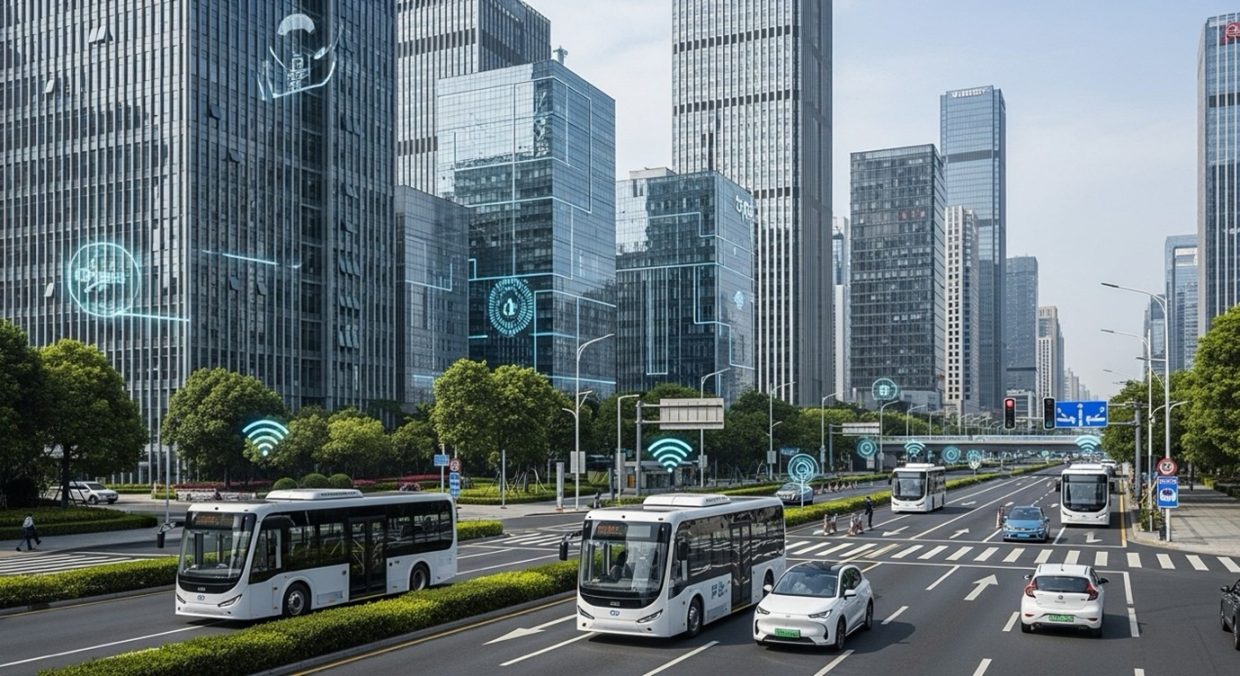
The image was created using AI and is for illustrative purposes only.
Interest in the project is already being felt not only among specialists, but also among local residents. In the Almaty Region, Alatau City is being discussed everywhere, from business circles to neighborhood conversations. People are looking forward to the start of active construction, hoping the city will become not just another development project, but a living example of how technology can truly improve quality of life.
“The main thing is that new technologies should work not for reporting, but for people. As residents, we are following the project with interest and hope that Alatau City will become a truly smart and convenient city. We are waiting for solutions that will make everyday life more comfortable, from transport and ecology to digital services. We want it to be not just a beautiful project, but a breakthrough for the country, similar to what Astana once became,” shares Arman P., a resident of the Almaty Region.
Universal solutions and partnership ecosystems
Creating a truly smart city requires coordinated participation from many stakeholders, from developers and architects to IT companies and UrbanTech solution providers.
It has not yet been specified which format will be chosen for building Alatau City’s digital infrastructure: a single ecosystem managed by one operator, or integration of solutions from different companies. However, it is likely that the project will develop under a mixed model, where in-house developments are complemented by technologies from leading market players. The choice of platform is strategically important: it determines how resilient, safe and easy to manage the city will be.
Such an approach can make it possible to unite key systems within one digital contour, from video analytics and transport monitoring to engineering network management and urban safety. This will ensure flexibility, scalability and technological compatibility, which is especially important for cities built from scratch and designed for long-term development.
The open city model creates a foundation for partnership between the state and the technology business, forming not fragmented services, but universal solutions that operate at the level of the entire urban ecosystem.
One example of such an integrated approach is INTEGRA CITY, a driver of digital transformation based on INTEGRA, a universal platform for managing modern cities. It unites energy, lighting, transport, safety, utilities, ecology and other mechanisms, ensuring the full functioning of a Smart City.
According to INTEGRA CITY specialists, integrated platform solutions allow cities to effectively respond to modern challenges in urban development, from optimizing resource management to increasing transparency and comfort of life. The platform collects and analyzes data from IoT devices in real time, manages engineering networks, ensures public safety and builds effective feedback with residents. These technologies form the basis for sustainable digital governance and make interaction between the city, business and residents more open and results-oriented.
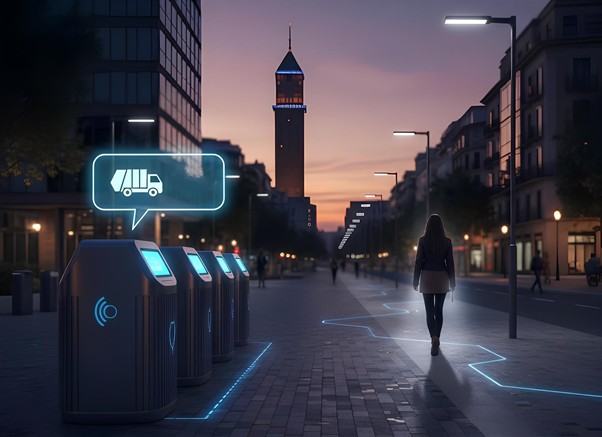
The image was created using AI and is for illustrative purposes only.
A city that speaks the language of technology
Alatau City is becoming a symbol of Kazakhstan’s new urban era, where digital technologies are not an add-on, but the foundation of development. It is a city created in digital form, with architecture, energy, transport and social services united into a single management system.
According to forecasts, by 2050 Alatau City will become home to 1.87 million residents and an attractive destination for more than 4 million tourists annually. The city will provide around 1 million jobs, while educational institutions will be able to accommodate up to 40,000 students. Housing stock will reach 55.8 million square meters, giving each resident an average of 30 square meters of comfortable space, while another 3.6 million square meters will be occupied by financial and business facilities.
The project demonstrates that the future of cities lies in the synthesis of engineering, data and human needs. Alatau City shows what a modern smart city can be: open, safe and genuinely convenient for life.
The Urban Marathon city event has launched in Bishkek as part of the Urban Space project, aimed at promoting sustainable urban development and involving young people in shaping the urban environment. The event is organized by the Sustainable Development Initiatives Public Foundation (SDI) with the support of the Bishkek Mayor’s Office and the Global Greengrants Fund. SDI is engaged in the implementation and promotion of social projects, programs and other initiatives in sustainable development in Kyrgyzstan, with a special focus on youth. The Urban Marathon brought together active young citizens and experts seeking solutions to urban challenges.
On October 25, during the second training day of the program, marathon participants learned about the role of digital technologies in urban planning. The speaker of the thematic session “Digital Solutions as a Driver of Smart Cities: From Concept to Reality in Kyrgyzstan” was Pavel Loran, Head of the Representative Office of INTEGRA CITY Group of Companies in Central Asia.
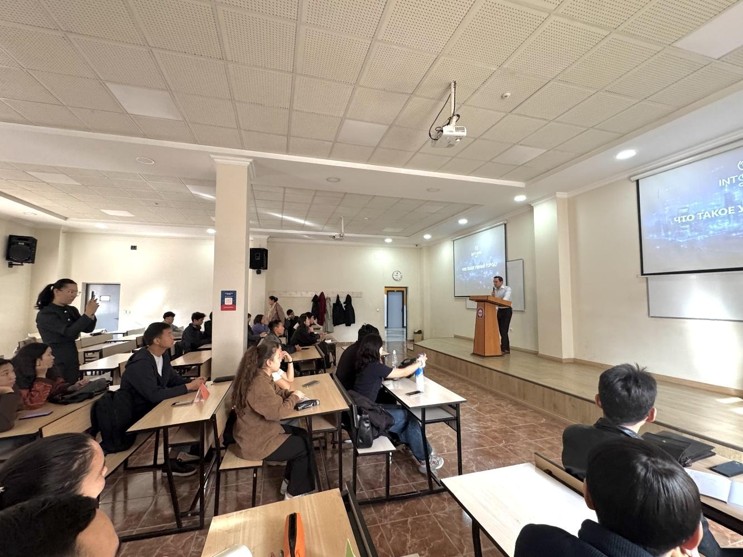
Photo: Urban Marathon, session “Digital Solutions as the Driver of Smart Cities. From Concept to Reality in Kyrgyzstan”
The level of urbanization in Kyrgyzstan is gradually growing and in 2025 reached 42%, which is 7% higher than two years earlier. This trend requires not only urban expansion and infrastructure development, but also comprehensive planning to build comfortable, safe and smart urban conditions where technologies serve people. According to Pavel, a modern city should be a place where data, innovation and people come together to improve quality of life. That is why digital solutions are becoming a key tool in shaping sustainable and livable cities of the future.
Smart City is a system where city management is built on data and automation. The concept includes the following areas:
- Transport and mobility
- Energy and environment
- Safety
- Digital services for citizens
- Smart infrastructure management
During the session, the expert spoke about key digital solutions used in cities and presented examples where artificial intelligence and IoT are already being applied to increase efficiency and improve quality of life. According to a Kept study, Singapore, Moscow, Beijing, London and Shanghai are among the leading smart cities. However, the process of intellectualization and digitalization has already affected capitals, megacities and even small towns in different countries around the world.
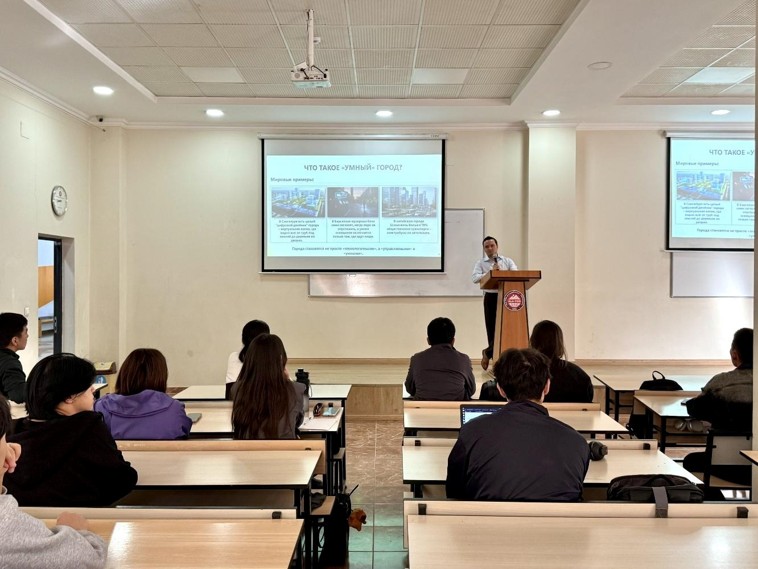
Photo: Urban Marathon, session “Digital Solutions as the Driver of Smart Cities. From Concept to Reality in Kyrgyzstan”
Kyrgyzstan is no exception. In his speech, Pavel Loran noted that the country is already taking its first confident steps toward building smart cities: the Safe Country project is being implemented, smart traffic lights, parking systems, meters and pilot projects for video surveillance and transport monitoring are being introduced. However, the speaker emphasized that the key challenge is the lack of integration between systems and unified coordination among agencies and services. A solution could be the creation of a single digital city management platform.
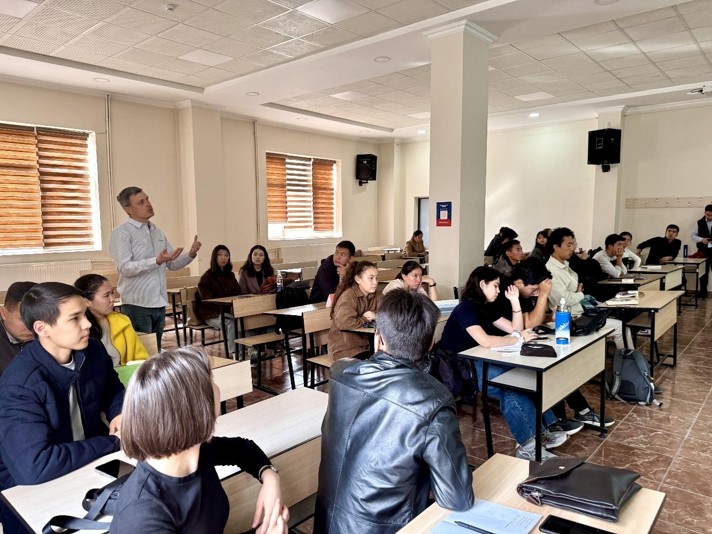
Photo: Urban Marathon, session “Digital Solutions as the Driver of Smart Cities. From Concept to Reality in Kyrgyzstan”
International companies such as INTEGRA CITY offer platform-based solutions for cities. With this approach, transport, utility and administrative infrastructure can be integrated into a single smart ecosystem. The platform analyzes data from multiple sources, identifies risks and helps make decisions before a problem occurs. This makes city management more coordinated, transparent and efficient — from traffic regulation to control over the entire infrastructure.
“A smart city is not about technology for the sake of technology. It is about comfort, safety and people’s quality of life. We want Kyrgyzstan to become an example of how digital solutions can make cities truly smart and sustainable, and we are pleased to share our experience and knowledge with the younger generation of citizens,” commented Pavel Loran.
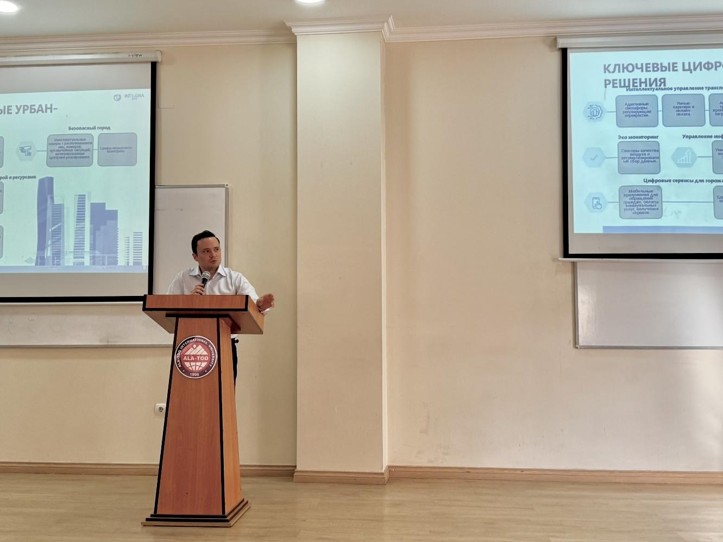
Photo: Pavel Loran, Head of the INTEGRA CITY Group of Companies’ Representative Office in Central Asia.
At the end of his speech, the expert emphasized the importance of every contribution to improving shared urban space — from authorities, businesses, specialists and each resident.
Danil Tsoi, President of the Sustainable Development Initiatives Public Foundation (SDI), noted: “The Urban Marathon pays special attention to the topic of digital development of the urban environment, where targeted expertise is needed. We are very pleased with the active participation and involvement of INTEGRA CITY Group of Companies in educating our young participants, who will be able to work with experts to develop innovative solutions for our smart city.”

Photo: Danil Tsoi, President of the Sustainable Development Initiatives (SDI) Public Foundation
According to the organizers, the Urban Marathon brought together more than 80 participants — students, young professionals and simply active, engaged citizens. They will go through several more training days and form teams to develop innovative urban projects in digital technologies, architecture, infrastructure and ecology. The event will continue until November 22 and will conclude with an official ceremony where the best project will be selected and the winners awarded.

Photo: Almaty.
As digital solutions and Smart City technologies develop, cybersecurity is coming to the forefront. Today, a smart city is not merely video cameras and automated systems, but a complex digital ecosystem where any entry point can become a vulnerability. Such a city relies not only on technology, but also on residents’ trust. At the heart of this trust are reliable personal data management and protected digital infrastructure. In these conditions, cybersecurity becomes a key factor in sustainable urban development and a solid foundation for digital services in Kazakhstan.
On September 8, 2025, President of Kazakhstan Kassym-Jomart Tokayev held a meeting of the Security Council, where he emphasized the need to strengthen protection of the digital environment, prevent data leaks and develop cybersecurity competencies. These tasks are closely connected with urban infrastructure, from video surveillance systems to digital call centers and housing and utility platforms.
Digitalization has covered schools, hospitals, transport, shopping centers and city squares. Cameras, panic buttons, facial recognition systems, GPS-enabled video badges for ambulance services, smart traffic lights and analytics modules are being installed. All of this is aimed at improving safety and transparency in urban processes.
However, every such device generates data, including information about people’s behavior and location, creating vulnerable links in digital infrastructure. The level of cybersecurity determines how reliable, resilient and trustworthy the digital environment of a smart city will become—and therefore its future. A secure digital city begins with cyber protection, which becomes a strong foundation for innovation and residents’ comfort.
More digital data means higher risks
The implementation of modern platforms is often accompanied by challenges related to cybersecurity and protection of citizens’ personal data. In recent years, many fraud cases have been recorded, where criminals posing as bank employees issued loans in the names of pensioners. There have also been student data leaks and suspicions of compromise involving the database of the Unified Accumulative Pension Fund. Such incidents undermine trust in digital infrastructure and raise the question of protecting cities and their residents. Against this background, public cybersecurity is increasingly discussed as a key element of protecting the digital space.

Photo: Shutterstock.
One of the largest platforms for such discussion was the KazHackStan 2025 forum held in Almaty. The event brought together representatives of government agencies, business and international experts. Umitzhan Arykbekova, Deputy Chair of the Information Security Committee of the Ministry of Digital Development, Innovation and Aerospace Industry of Kazakhstan, emphasized that cybersecurity today is not only about protecting key digital projects, but also a tool for strengthening state sovereignty and developing digital diplomacy. She noted during the forum that Kazakhstan actively cooperates with neighboring countries and international organizations, confirming the effectiveness of its work. According to the UN ranking, the country is in the second-highest group, meeting more than 90% of international standard requirements and maintaining leadership in the CIS and Central Asia.
People are learning to use technology consciously and safely: to filter information, avoid suspicious links and questionable calls. Knowledge of information hygiene and security is growing. At the same time, it is also important to increase trust in proven and reliable technical solutions in order to use their advantages effectively.
It is possible to live safely and confidently when every digital footprint is protected, and when personal data, information about housing and utility services, and logins and passwords for digital systems are reliably guarded by modern technologies within smart urban infrastructure. The city of the future is impossible without cyber protection: it becomes a shield that protects every digital step and guarantees residents’ peace of mind.
Architecture of trust: the role of platforms in integrating solutions
Integrated platform solutions play a key role in ensuring security. They unite fragmented systems into one manageable ecosystem, making it possible to centralize control over personal, behavioral and technical data flows, as well as events in the digital environment; respond promptly to incidents; detect and block cyber threats at early stages; manage access to confidential information; and protect critical elements of urban infrastructure.
Without such platforms, it is impossible to build a truly secure digital city.

Photo: author’s illustration.
In his latest Address, the President of Kazakhstan emphasized the importance of scaling the Smart City approach, introducing international practices and attracting qualified specialists, underlining the relevance of integrating foreign and domestic solutions.
Among international players in cybersecurity for smart cities are Palo Alto Networks, Cisco, Fortinet and INTEGRA CITY, which offers the universal INTEGRA integration platform for comprehensive automation of key areas of urban life. It covers processes in utilities, transport, border protection and infrastructure; manages smart city and safe city systems; integrates external solutions; and ensures a high level of protection and compliance with local regulation. In the future, the platform may be integrated into regional projects in Kazakhstan.
“For us, it is important that we do not store or transfer users’ personal data to third parties. All information remains under the control of the authorized bodies for which the solutions are created. Cyber protection in Kazakhstan is developing rapidly, and we are ready to provide reliable tools and a technology platform for managing digital risks, data and the security of urban infrastructure, while respecting each user’s privacy,” says Pavel Loran, Head of the Representative Office of INTEGRA CITY Group of Companies in Central Asia.

Photo: Pavel Loran, Head of the INTEGRA CITY Group of Companies’ Representative Office in Central Asia.
In smart cities, every sensor, camera and detector is part of a unified system. Without sustainable cybersecurity, this system becomes vulnerable because it contains key data about residents. Cybersecurity is a decisive factor in the future and resilience of smart cities.
Modern digital platforms create not just technical infrastructure, but an architecture of trust: an environment where citizens, business and the state interact in full security. This is the foundation of a future in which technology works for the benefit and protection of everyone.