
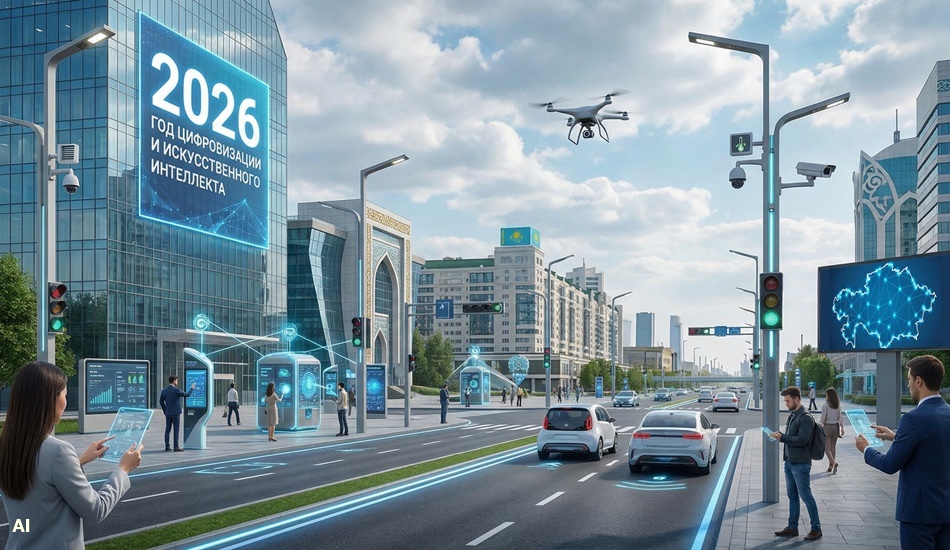
The image was created using AI and is for illustrative purposes only.
Kazakhstan is entering a new digital era: the country is moving from individual smart cities to the broader Smart Region concept, where technologies connect entire territories. This is not simply innovation or a fashionable term; it is a new management model that takes into account the economy, climate, infrastructure and people’s quality of life. Data, analytics and artificial intelligence are becoming part of everyday life: they help simplify daily tasks, feel the pulse of a city and region, improve governance and create a comfortable space for residents.
From Smart City projects to Smart Region
In recent years, the first Smart City projects have appeared in Kazakhstan. They have covered transport, housing and utilities, safety, public services and urban monitoring. Residents have already felt the advantages of digital technologies: queues have become shorter, abnormal situations are prevented faster, and city management has become more transparent and efficient.
On the basis of these pilots, the country is taking a natural step forward toward Smart Region. This is a model in which digital governance extends to entire territories, not only individual cities. Smart Region is built on a unified national standard of digital development that includes 16 areas and 90 performance indicators. According to the 2025 achievements report of Kazakhstan’s Ministry of Artificial Intelligence and Digital Development, this makes it possible to track regional progress and make management decisions based on comparable data.
President Kassym-Jomart Tokayev paid special attention to digitalization by declaring 2026 the Year of Digitalization and Artificial Intelligence. Digitalization is considered not an end in itself, but a tool for economic and infrastructure development and for improving the quality of life in cities and regions.
Smart City in Europe: rankings, technologies and examples of urban development
International experience clearly shows how the Smart Region concept works in practice. In Europe, for example, digitalization is developing around territories, not only administrative boundaries.
Smart cities represent the future of urbanization in Europe: they are connected, sustainable, digital and capable of improving the quality of urban life. With support from European Union funding, European capitals are implementing increasingly innovative solutions to address environmental and social challenges.
The Smart City concept, which emerged in the last century, has evolved alongside digital technologies. In Europe, it is understood as improving lighting, heating, water supply and waste management, increasing safety and convenience in the urban environment, and making administration more efficient and inclusive. All this is enabled by data and technologies such as IoT, Big Data, 5G, cloud solutions and AI.
International rankings are used to assess the dynamics of digital development in territories. One of the most significant is the Smart City Index, compiled annually by the Smart City Observatory at the IMD World Competitiveness Center together with the Singapore University of Technology and Design. In 2025, the IMD Smart City Index included 146 cities around the world, assessing their ability to harmonize technology and quality of life based on citizen surveys. The ranking analyzes five areas: activities and opportunities, governance, mobility, health and safety, and employment.
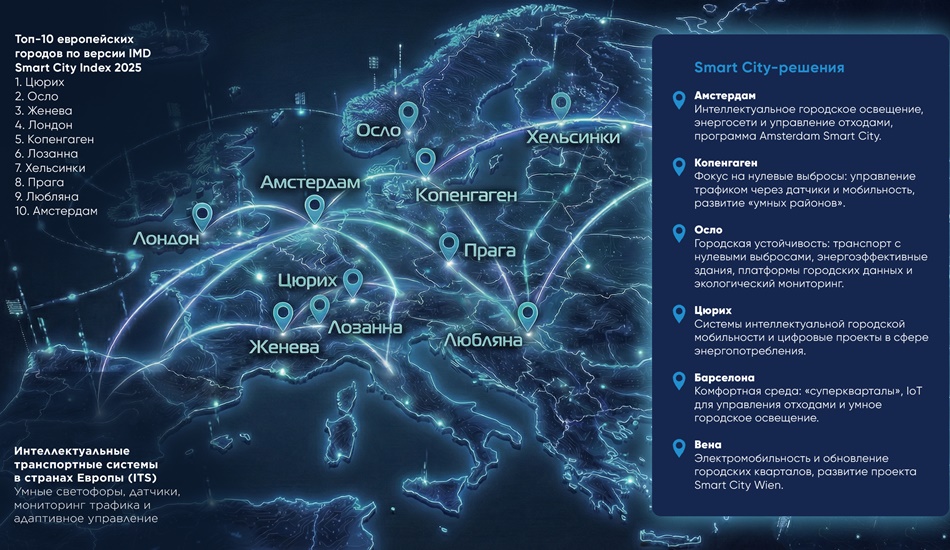
Image: IMD Smart City Index 2025. AI-generated and for illustrative purposes only.
Intelligent transport systems
Transport is one of the key areas of digitalization. Every day, thousands of vehicles move through cities, regions and between them. In Kazakhstan, companies are already implementing photo and video violation detection systems and other hardware and software solutions. In Europe, the focus is shifting toward intelligent transport systems (ITS), which help manage flows, improve safety and integrate different modes of transport.
Cooperative intelligent transport system projects, such as MATIS, X4ITS, ACUMEN, SYNCHROMODE, DELPHI and CONDUCTOR, demonstrate how smart traffic lights, sensors and monitoring systems help reduce congestion, cut emissions and improve the resilience of transport networks at the urban, regional and international levels.
Kazakhstan on the path to Smart Region
All of the international projects mentioned show that integrating digital services into the daily life of cities and regions makes it possible to create manageable, safe and sustainable territories. In Kazakhstan, the international INTEGRA CITY Group of Companies acts as a potential technology partner, bringing global experience in the digitalization of cities and regions.
The company specializes in the development, implementation and comprehensive support of Smart and Safe City systems. INTEGRA CITY is a universal ecosystem that combines an AI-managed set of modern platform solutions for digitalizing key aspects of life in settlements of any scale.
According to company representatives, Kazakhstan has strong potential for implementing comprehensive digital solutions: dynamically developing cities coexist with broad regional centers where digitalization can improve quality of life, simplify infrastructure management and accelerate data-driven decision-making.
Southern regions are of particular interest, including the Almaty and Zhetysu regions, where digitalization is developing in parallel with infrastructure and transport. These territories are becoming natural platforms for testing and scaling Smart Region. Thanks to economic activity, human capital and emerging production clusters, the Smart Region model becomes a competitive advantage, stimulating investment and improving governance. For residents, this means reducing the gap in access to modern services between megacities and regional centers.
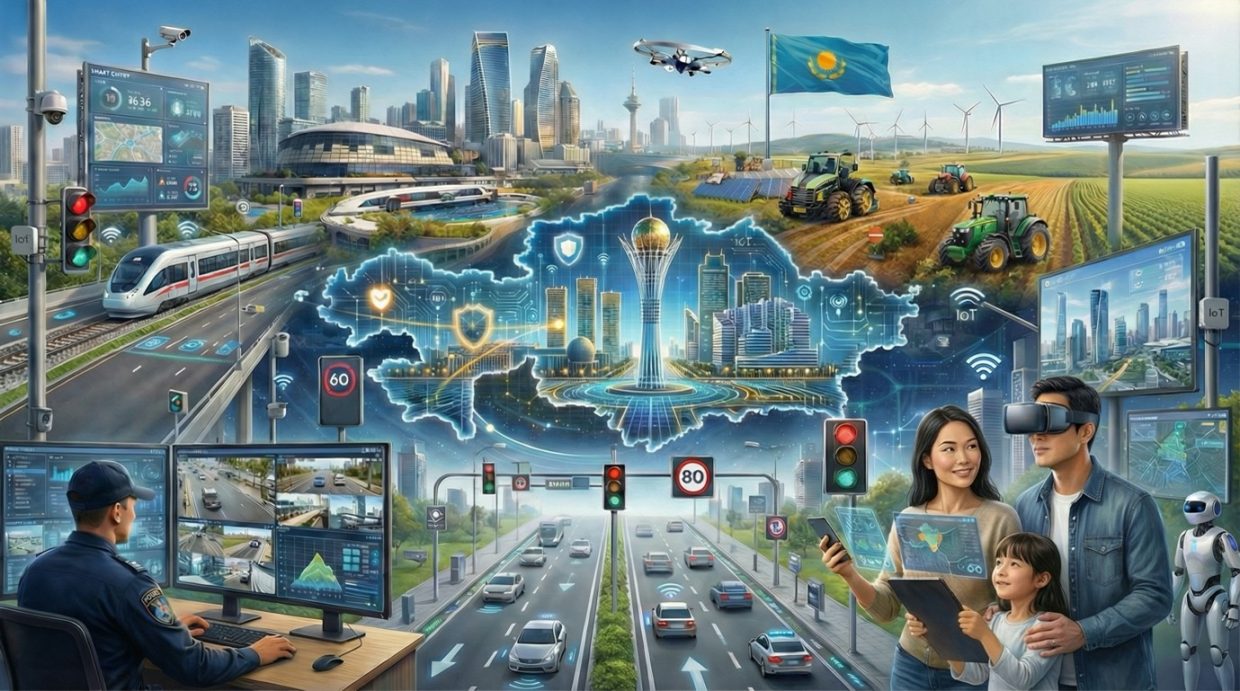
The image was created using AI and is for illustrative purposes only.
“The Smart City and Smart Region concepts are not about fines or video cameras. In reality, they represent a new approach to territorial management, where decisions are based on data and analytics. Technology should help people. Yes, fines may occur, but it is important for everyone to understand that this is about safety. People already see that technology makes life simpler and more comfortable, and trust in services is growing. In the cities where we work actively, we try to interact closely with the population, create dialogue and launch social programs so that people gradually see the benefits themselves. For Kazakhstan’s regions, this is especially important, so that people have the same opportunities as in large cities,” says Ilya Belyakov, Director of the Technical Department of INTEGRA CITY Group of Companies.
The transition to the Smart Region model in Kazakhstan opens real opportunities for residents across the country, not only in major cities. As 2026 has been declared the Year of Digitalization and Artificial Intelligence, technologies are beginning to bring practical benefits to people: simplifying interaction with services, improving convenience and safety, and making infrastructure management transparent. As a result, residents of regions can experience the same opportunities and comfort as urban residents, while digitalization gradually becomes part of everyday life.