
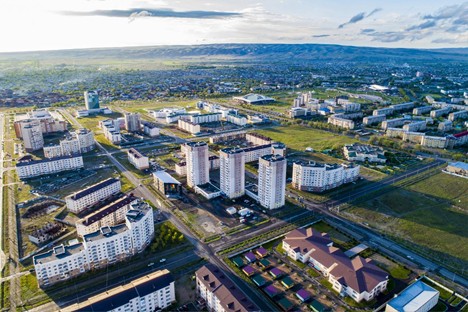
Pictured: Taldykorgan. This image is for illustrative purposes only.
Kazakhstan’s cities are steadily moving toward digital transformation. Modern technological solutions are appearing more frequently. Yet a truly smart system is not a set of separate technologies, but a coordinated ecosystem in which transport, safety, utilities and infrastructure work together. The Smart City concept is a practical tool for responding to the challenges of our time: population growth, pressure on infrastructure, and the need for transparency and efficiency.
Experts share their vision of how a smart city should be implemented: architect and urbanist Sanzhar Kaziyev, and Pavel Loran, Head of the Representative Office of INTEGRA CITY – FZCO Group of Companies in Central Asia.
Sanzhar Kaziyev: “Smart City is not about cameras, but about a culture of decision-making”
Sanzhar Kaziyev, Chief Architect of the Q88 Association for Sustainable Territorial Development, believes that in Kazakhstan the term “smart city” still often resembles an attractive slogan.
“Today, Smart City is most often understood as cameras and data collection. But cameras are only a tool. They do not solve problems unless there is a systematic approach and expert assessment behind them. We need not just cameras, but specialists who can interpret data. Only as a whole does this become a resource for decision-making,” Kaziyev says.
Digitalization, he emphasizes, should not be a reporting exercise, but a working management tool. If there is a traffic jam in the city, the key is not simply to install another camera, but to understand the reason and find a solution. In other words, a smart city is not about control, but about diagnostics.
Kaziyev notes that quick digital fixes are often used instead of a systematic approach to urban planning. However, he believes Kazakhstan is at a point of potential growth. The emergence of urban planning cadastres, digital data and new tenders are positive signals. Still, digitalization should cover not only security or utilities, but all urban planning.

Photo: Sanzhar Kaziyev, chief architect of the public association of urbanists “Association for Sustainable Development of Territories Q88”.
The expert also stresses the importance of public dialogue. In his view, people should understand that a smart city is not surveillance, but a tool for improving the quality of the urban environment. Surveys should be conducted and behavior studied: where people work, how they move around and how they spend their free time. This makes it possible to understand real needs and build infrastructure around people.
Kaziyev concludes that Smart City is not a set of cameras, but a culture of conscious decisions. Kazakhstan needs not simply digitalization, but real urban transformation: human-centered, logically structured and sustainable.
How can a city be brought into one digital system?
Fragmented measures such as installing cameras or connecting smart traffic lights do not create a real smart city. A comprehensive transformation is required: well-designed infrastructure, trained specialists, an engaged population and a technology platform that brings everything together.
Companies specializing in such ecosystems increasingly offer universal turnkey tools, from equipment connection and infrastructure deployment to software development and staff training. One example is INTEGRA CITY, a group of companies offering a platform that unites city services into a single digital environment where decisions are made based on data rather than assumptions.
Pavel Loran, Head of the Representative Office of INTEGRA CITY – FZCO Group of Companies in Central Asia, believes that creating a smart city should begin with a mission: systematic transformation, not technological experiments.
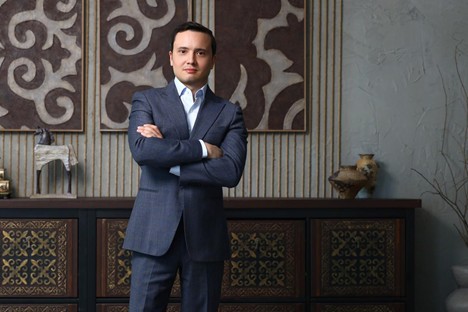
Photo: Pavel Loran, Head of the INTEGRA CITY Group of Companies’ Representative Office in Central Asia.
“Our goal is not simply to introduce innovations, but to build a sustainable digital environment where all elements of urban life interact with each other. A smart city is first and foremost an ecosystem: transport, safety, utilities, communications, ecology and administration united in one architecture. When all data flows into one platform, it becomes possible not only to respond promptly, but also to forecast, plan and develop strategically,” Loran explains.
INTEGRA CITY assesses each region individually when considering where its solutions may be deployed. The company takes into account climate, population density, transport infrastructure and digital maturity. For actively developing areas such as the Almaty and Zhetysu regions, special attention is paid to transport connectivity, safety and infrastructure quality.
“We do not copy solutions. Each project is adapted to a specific urban context. That is why the INTEGRA CITY platform scales flexibly, allowing both large agglomerations and smaller towns to be connected,” the expert notes.
Speaking about the company, Loran emphasizes that INTEGRA CITY aims to become part of Kazakhstan’s systematic digital development. The company’s platform can unite municipal and emergency services, improve management of utility resources, increase process transparency and improve the quality of public services.
The INTEGRA CITY strategy places special emphasis on cooperation with the state. According to Loran, deep integration of the platform into existing processes is possible only in partnership with public authorities. At the same time, digital tools must be intuitive and useful, while residents should become active participants in the transformation.
“We create feedback interfaces: mobile applications, online services and civic participation modules. This helps build an environment in which the city hears its residents,” he says.
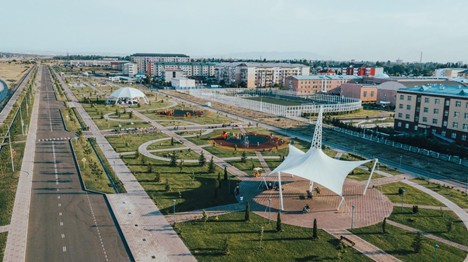
Pictured: Taldykorgan. Image by Zhenis Iskabay. Image is for illustrative purposes only.
The company’s experience has already been implemented in several countries in Latin America and Africa. In Kazakhstan, INTEGRA CITY plans active expansion, including cooperation with small and medium-sized cities, development of local teams and integration of new technological solutions.
“We believe Kazakhstan is ready for a systemic leap. There is demand, potential and a window of opportunity here. Our task is to offer not simply a digital platform, but a development logic in which every city is a manageable, sustainable and understandable system,” Pavel Loran summarizes.
Thus, the digital transformation of cities in Kazakhstan requires deep and systematic work. Only integrated platforms combined with a cultural approach can create a comfortable and safe environment for life and urban and regional development.