
With the start of the new academic year, more than 1.5 million schoolchildren in Kyrgyzstan took their seats at desks — or, more precisely, opened laptops, logged into electronic diaries and became part of a rapidly developing digital school environment.

Photo: Pexels / Katerina Holmes.
As Minister of Education Dogdurkul Kendirbaeva emphasized, September 1, 2025 was not just a date — it opened a new chapter in the development of education in the country. This year has been marked by major changes: the transition to a 12-year education system and the large-scale introduction of digital solutions into the school environment.
Digital tools are becoming an integral part of school life: from internet access and laptops to online diaries, electronic textbooks and smart safety systems. The goal of this transformation is clear — to create a school that is not only modern and convenient, but truly safe. Let us look more closely at the technologies behind these changes.
Digital foundation: equipment and internet as the new school reality
A digital school begins not with programs and applications, but with what can be seen with the naked eye — computers, laptops and internet access.
Today, more than 27,000 teachers have received Altyn-Kazyk laptops, and this number is expected to double in the near future. Computer classrooms are opening in schools across the country, and more than 95% of educational institutions are already connected to the internet. This means that more and more schoolchildren are gaining access to electronic diaries, online lessons and interactive educational platforms.
Electronic diary, online enrollment and digital certificate — the school of the future is already here
Digital transformation has affected everyone: students, parents and teachers.
Today, a child can be enrolled in school online through the Mektep portal or the Tunduk application, without queues or paperwork. All personal files are stored electronically, which simplifies transfers between schools and access to student records.
Paper diaries and journals are becoming a thing of the past, replaced by E-Kundoluk. This is a full-fledged digital tool where teachers enter grades, record schedules and attendance, leave comments online, and parents and students receive prompt access to information about academic performance and timetables.
For learning, students can use the Sanarip Kampa platform with interactive materials and Oku Kitebi, an online library of all textbooks available free of charge and without internet access. Starting in 2025, certificates and diplomas can also be obtained in electronic format through Tunduk.
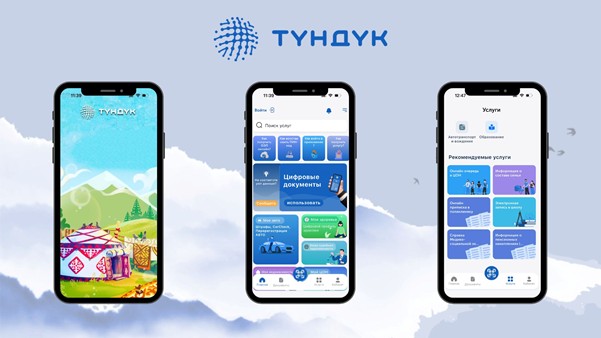
Photo: Tunduk app.
For those who cannot attend regular classes due to health, distance or other reasons, the Tunguch project — the first national online school — began operating in 2025. Its format is close to regular classes, but adapted to online learning opportunities. This is not simply a temporary solution, but a full-fledged tool for creating an accessible and flexible educational environment across the country.
Teachers at the center of change: training and digital tools
A digital revolution in schools is impossible without those who stand at the blackboard every day — teachers. More than 26,000 teachers, as well as all principals and deputy principals, have completed professional development courses and are prepared for the new academic year.
At the educational forum “Zhanalykten Zharchysy,” teachers were introduced to updated standards, new teaching methods and modern digital tools, including elements of artificial intelligence.
During the summer, a series of seminars was also held on working with key platforms — Sanarip Kampa and E-Kundoluk — organized by the Ministry of Education together with the developer company Ulut Soft.
According to the Ministry of Education of the Kyrgyz Republic, the teaching profession remains in demand, and digitalization is making it more modern and attractive, as the number of students in pedagogical programs continues to grow.
Safety as the foundation of trust: school as part of a smart city
No matter how modern a school is, safety remains its key element. Without peace of mind and confidence in protection, it is impossible to create conditions for successful learning.
That is why the Government of Kyrgyzstan is actively investing in the creation of a reliable and well-designed school safety system. In 2025, more than 100 schools in Bishkek were equipped with video surveillance cameras with facial recognition, panic buttons and systems integrated with the Ministry of Internal Affairs situation center. At a parliamentary meeting in April, Deputy Minister of Education and Science Nadira Jusupbekova stated that video cameras cover around 80% of the country’s educational institutions, and this process is constantly expanding.
Installing video cameras in schools and surrounding areas not only increases student safety, but also helps strengthen discipline and reduce conflicts, aggression and violence. Modern technologies, including facial recognition, make it possible to promptly detect offenses and prevent potential threats from escalating — for example, identifying convicted persons or terrorists on school premises. Today, all school video cameras are connected to the Ministry of Internal Affairs’ Safe Country system, ensuring continuous monitoring of threats and rapid response.
However, safety is not only about internal video surveillance. It is equally important that children feel protected not only inside the school, but also on their way to and from school. Experts from INTEGRA CITY, a company specializing in digital solutions for urban infrastructure, utilities, transport and administrative services, emphasize that the modern school is becoming part of a smart urban environment where technologies work as a whole.

Photo: Bishkek city.
For example, the INTEGRA platform includes video surveillance with real-time intelligent analytics, which can promptly detect strangers in schools and track cases of bullying or disciplinary violations. Such data not only helps maintain a safe and healthy atmosphere for learning and communication, but also provides important insights for developing programs that improve academic performance and students’ personal development.
The integration of video surveillance with emergency services and smart street lighting provides comprehensive protection for schoolchildren at every stage of their journey — on the street, in transport and on school grounds. In this way, student safety is viewed not only as an internal responsibility of educational institutions, but as part of comprehensive urban infrastructure.
In addition, modern technologies make it possible to respond quickly to incidents and prevent risks everywhere. Continuous analysis of behavior and events helps create adaptive support measures, making schools truly digital and focused on each student’s needs.
Another important advantage of the platform is its flexibility: it can easily adapt to existing infrastructure and technologies, or, if necessary, be built fully from scratch to provide a comprehensive modern safety solution.
Pavel Loran, Head of the Representative Office of INTEGRA CITY Group of Companies in Central Asia, commented on this topic: “Modern digital technologies open up new opportunities for comprehensive child protection. Our solutions help cities and schools build an effective safety system that operates around the clock and covers all aspects of schoolchildren’s lives — from classes to a safe journey home. We would be glad to become part of Kyrgyzstan’s large-scale digital transformation in education and are ready to support the further development of these systems.”

Photo: Pavel Loran, Head of the INTEGRA CITY Group of Companies’ Representative Office in Central Asia.
The changes taking place in Kyrgyzstan’s schools today are not merely a technical upgrade, but a deep digital reform of education. It covers everything from internet access and digital educational platforms to teacher training and the creation of advanced safety systems. These technologies do not replace teachers and textbooks, but they make learning more accessible, flexible and safe. Most importantly, they create conditions in which every child can feel confident and protected — whether in the classroom, at home or on the way between them.